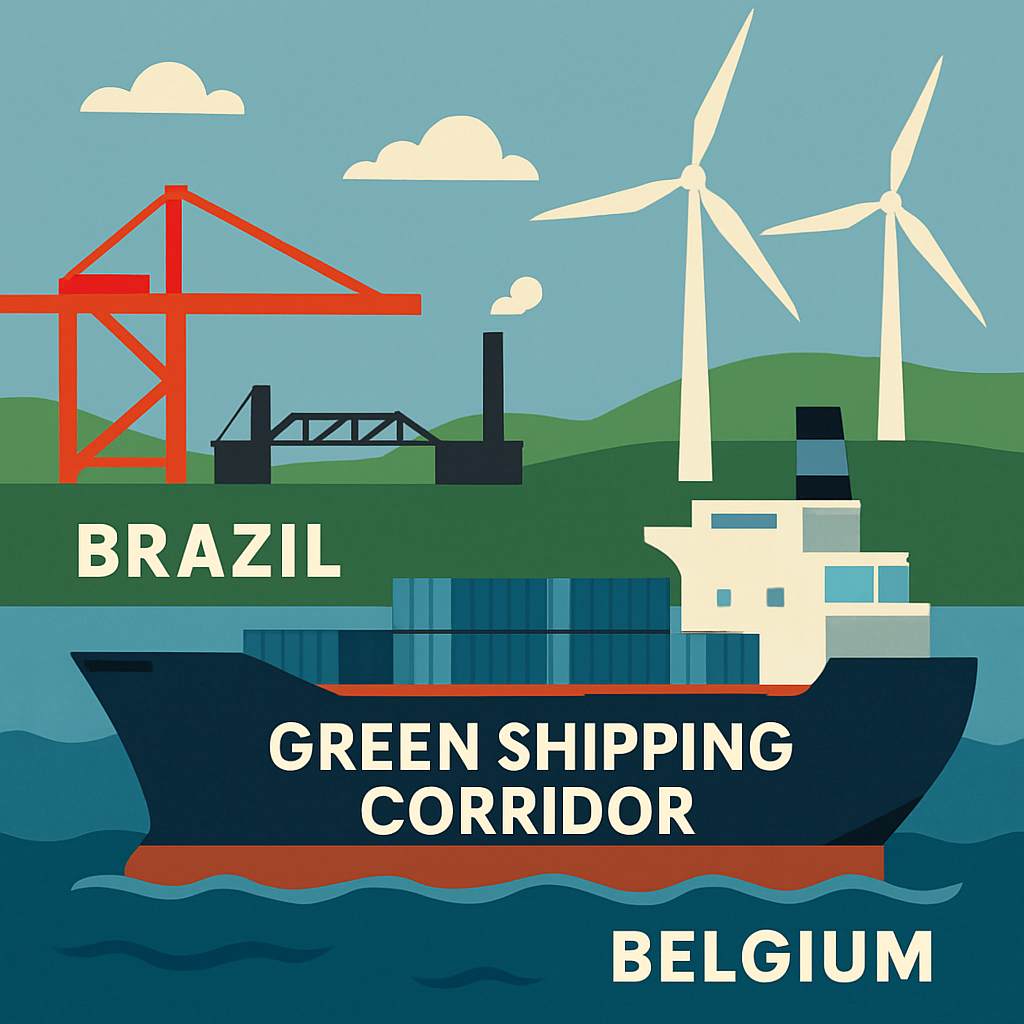
A consortium convened by the Global Maritime Forum (GMF) and RMI has launched an initiative to explore the development of a green shipping corridor linking the Port of Açu in Brazil with the Port of Antwerp-Bruges in Belgium.
The consortium includes port authorities from both sides of the proposed corridor, as well as industry participants including HIF Global, Fuella, NYK Line, Höegh Autoliners, and Wallenius Wilhelmsen.
The group will also examine the infrastructure requirements, vessel readiness, and commercial frameworks necessary to enable large-scale transportation of zero-carbon fuels, such as green ammonia and green methanol produced in Brazil.
According to the proposed concept, the fuel will be transported using vessels powered by the same or comparable low- and zero-emission energy sources, which will be part of an integrated approach to the supply chain for decarbonized maritime transport.
The consortium builds on previous work by RMI and the Global Maritime Forum, including a preliminary study published in November 2025 that identified the Port of Açu as a potentially competitive hub for the production of green fuels.
The study highlighted key advantages such as Brazil's supportive green hydrogen policy, a largely renewable energy mix, abundant renewable energy resources, and relatively low capital costs. A separate report in 2024 prepared by the two organizations also emphasized Açu's potential as a major export hub for future green fuel production.
Commenting on the initiative, Eleanor Wells, Senior Project Manager at the Global Maritime Forum, noted that the collaboration is a step forward in aligning emerging production capacity in Brazil with the expected demand for green fuels in Europe.
Green shipping corridors are designated trade routes where zero-emission shipping is incentivized by actions from both public and private entities.
These routes are considered central to achieving the maritime industry's goal of having zero-carbon fuels account for 5% of all fuels by 2030.
While green corridors are rapidly expanding worldwide, and several initiatives have already reached the implementation stage, the latest progress report on green shipping warned that progress is slowing due to a "feasibility wall" created by the cost gap between traditional and zero-carbon fuels.
The Global Maritime Forum and RMI will continue to facilitate the realization of the Açu-Antwerp corridor, with work actively progressing from preliminary feasibility to the development of a feasibility analysis for the corridor. The feasibility analysis is expected to be published by the end of the year, and the consortium will meet regularly during this time.



%20scale(3)'%3E%3Cpath%20id='s'%20d='M0,-30%2017.63355,24.27051%20-28.53171,-9.27051H28.53171L-17.63355,24.27051z'%20fill='%23FF0'/%3E%3C/g%3E%3Cuse%20xlink:href='%23s'%20transform='translate(300,60)%20rotate(23.036243)'/%3E%3Cuse%20xlink:href='%23s'%20transform='translate(360,120)%20rotate(45.869898)'/%3E%3Cuse%20xlink:href='%23s'%20transform='translate(360,210)%20rotate(69.945396)'/%3E%3Cuse%20xlink:href='%23s'%20transform='translate(300,270)%20rotate(20.659808)'/%3E%3C/svg%3E)