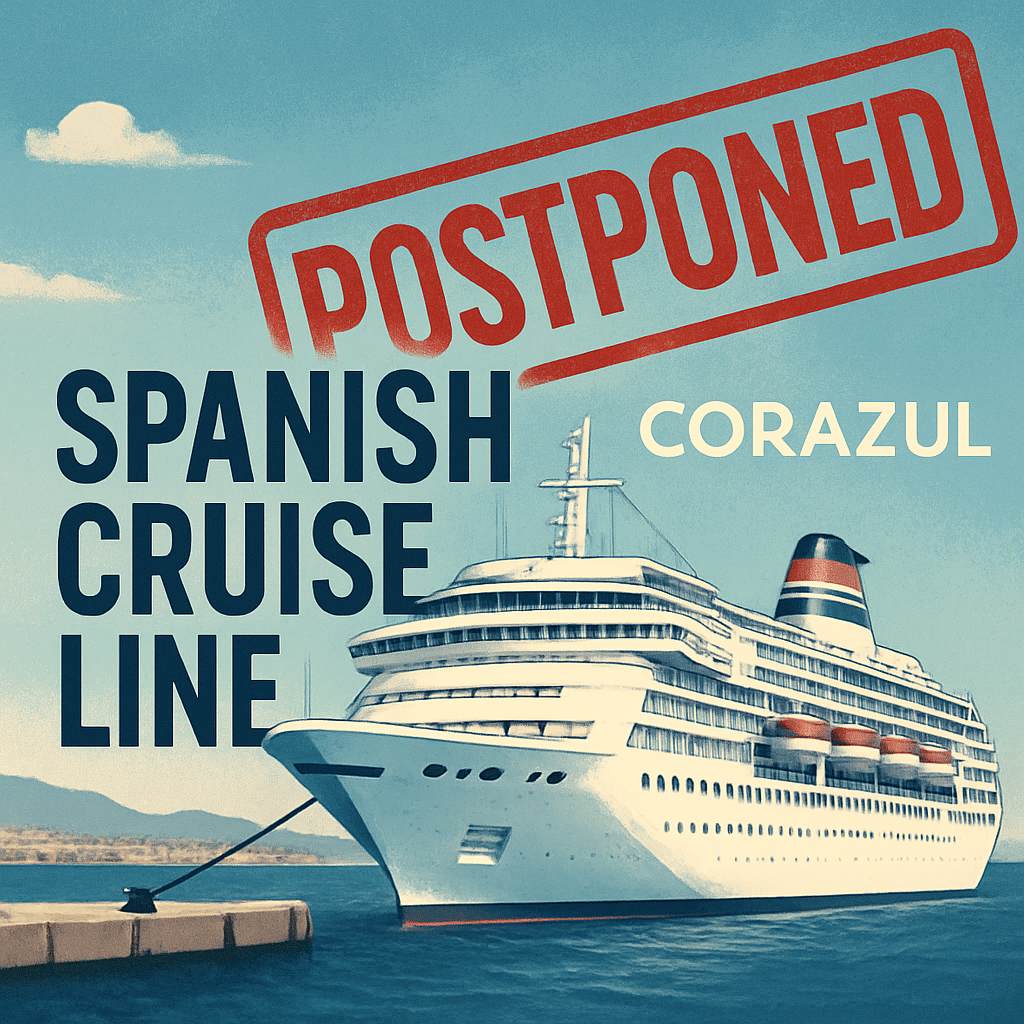
Plans for the launch of a niche cruise liner aimed at the Spanish-speaking market have been postponed. The new company, named Corazul, announced that it is canceling its summer schedule in the Mediterranean, which was set to begin in July.
Corazul is moving forward but will now focus on launching in the Brazilian market in the 2026-2027 season. The company announced its plans in early 2026 when it decided to resume operations aimed at Spanish-speaking tourists. This market was previously served by another operator, Pullmantur, which was owned by Royal Caribbean Group for a time but ceased operations during the pandemic in 2020.
The concept of the new cruise operator was to tailor cruises to Spanish preferences, including later dining options and a greater emphasis on family and social events. Corazul reported that only 10% of customers from previous operations remained loyal to cruises after the closure of the two cruise lines.
Plans included launching operations in early July with a ship called Buneavista. However, after a thorough analysis of the market situation, the company decided not to proceed with the cruise program that was supposed to operate from Barcelona until October. A transatlantic crossing from Portugal to Recife, Brazil, was then planned for the 2026-2027 cruise season, before returning to Spain in March 2027.
The company noted that this was not an easy decision and it did not take it lightly. Corazul will focus on launching from Brazil, where it reports higher initial demand. Discounts of up to 50% on cruises from Spain in July and August were indicated on the company's website.
Details about the company's first ship have not been officially confirmed, but an image of the cruise liner Oriana, built in 1995 and previously sailing under the flag of P&O Cruises, was used. The ship was sold in 2018 to a Chinese group and renamed Piano Land. It began its service in 2019 and underwent a major refurbishment in 2020 to meet Chinese styles but was unable to return to operations until July 2024 due to cruise restrictions in China following the pandemic.



%20scale(3)'%3E%3Cpath%20id='s'%20d='M0,-30%2017.63355,24.27051%20-28.53171,-9.27051H28.53171L-17.63355,24.27051z'%20fill='%23FF0'/%3E%3C/g%3E%3Cuse%20xlink:href='%23s'%20transform='translate(300,60)%20rotate(23.036243)'/%3E%3Cuse%20xlink:href='%23s'%20transform='translate(360,120)%20rotate(45.869898)'/%3E%3Cuse%20xlink:href='%23s'%20transform='translate(360,210)%20rotate(69.945396)'/%3E%3Cuse%20xlink:href='%23s'%20transform='translate(300,270)%20rotate(20.659808)'/%3E%3C/svg%3E)