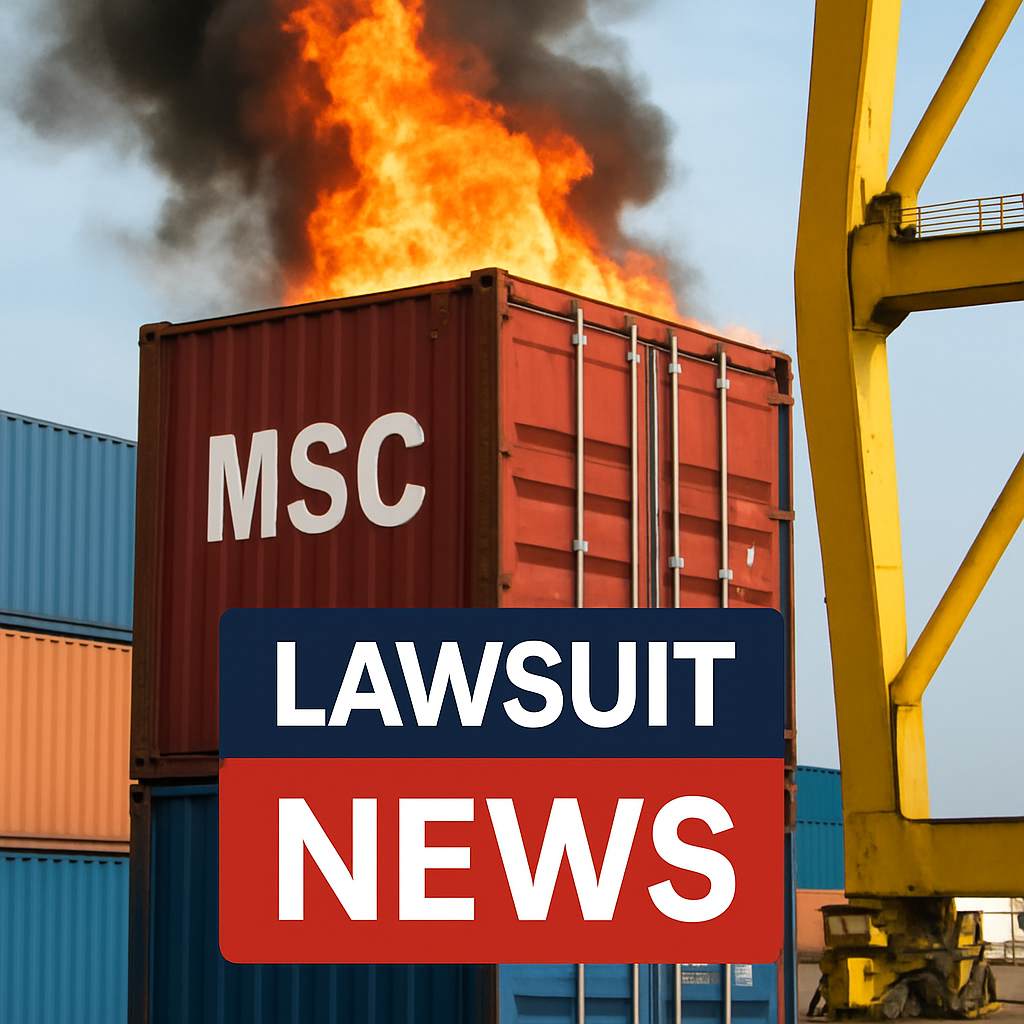
Fires on cargo ships rank among the top dangers faced by modern container vessels, partly because the operator has limited control over the cargo. A container is a sturdy steel box, and an experienced crane operator can move dozens of them on board the ship every hour. Typically, the ship departs with the cargo provided to it, including any hidden risks.
Last week in New York, the largest shipping line MSC filed a lawsuit against one of its clients, claiming that the client created conditions that led to a fire in a container.
In August 2023, the specialized vehicle auction and transportation company CargoLoop provided MSC with a container of "used, previously damaged electric vehicles" for a long-haul trip from California to Lithuania. The age of the electric vehicles was noted on the bill of lading, as was their IMDG code, and MSC accepted the cargo for shipment. (Some other carriers, such as ACL and Matson, do not accept used electric vehicles in any condition due to the perceived fire risk.) CargoLoop packed the container, according to MSC, using a wooden racking system to secure the vehicles. To fit more cars into the 40-foot container, at least one car was stacked on top of another.
In the early hours of September 2, 2023, the vessel (identified as MSC Carlotta in the shipping documents) was at sea off the coast of Baja California when an explosion and fire occurred on board. MSC claims the explosion originated from the CargoLoop container, which ignited a neighboring container also provided by CargoLoop and filled with electric vehicles. Several other containers were damaged by fire or flooded as a result of firefighting efforts.
The crew extinguished the fire, and the vessel was forced to divert to Mexico for unloading, inspection, and re-stowing of the two damaged CargoLoop containers. A specialized company was brought in to investigate the fire. According to MSC, investigators determined that the fire started somewhere near a 2018 Tesla Model S and a 2012 Ford Focus that was packed underneath the Tesla. MSC claims that the wooden racks may have collapsed during transit, allowing the Tesla to fall onto the Ford and potentially damage its battery. A similar case of rack failure was found in another CargoLoop container on the same voyage.
Alternatively, MSC suggests that one or more car batteries may have been damaged during handling by a forklift; or perhaps the shipper did not take necessary precautions to disconnect the car batteries, as was found with the remaining vehicles packed by CargoLoop in another container.
MSC is seeking significant compensation from its former client, including $60,000 for fire investigation, $60,000 for settling claims from other cargo owners, $86,000 for additional handling and disposal, and $25,000 for loss and damage to the container - totaling around $230,000, plus attorney fees, interest, and $43,000 for pre-litigation preventive measures.

 GLOAPM.COM