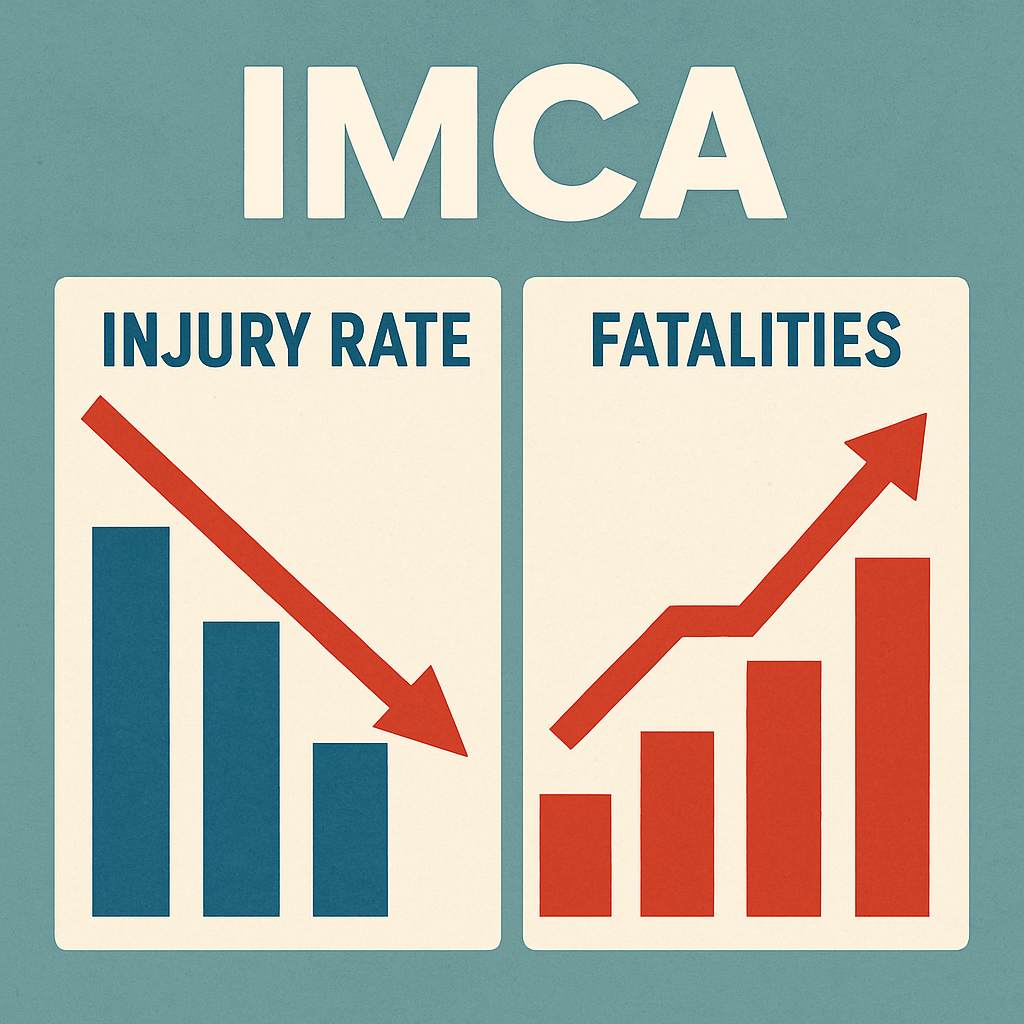
The International Marine Contractors Association (IMCA) has published its annual safety statistics report, which indicates that safety performance improved in 2025.
According to the report, both the Lost Time Injury Frequency Rate (LTIFR) and the Total Recordable Injury Rate (TRIR) decreased compared to the previous year. However, the report highlights that the number of fatalities has increased, underscoring the need for greater attention to preventing serious injuries and fatalities. Association members reported 268 lost time injuries and 996 recordable injuries in 2025.
The Fatal Accident Rate (FAR) increased from 0.30 to 0.69. Reported fatalities included electrocution, falls from height, and a mooring incident related to a rope failure, while details of four additional fatalities were not provided.
The overall LTIFR decreased from 0.30 in 2024 to 0.27 in 2025, while the overall TRIR decreased from 1.10 to 0.98. While these improvements represent positive progress, IMCA noted that the key injury metrics do not provide a complete picture of safety.
In 2025, seven fatalities were recorded, including four cases at sea. Reported fatal incidents included electrocution, falls from height, and a mooring incident related to a rope failure. Additional information on four other fatalities reported by two contractors was not provided.
IMCA stated that the increase in fatalities highlights the need to look beyond the key injury metrics and focus on preventing serious injuries and fatal incidents.
Each fatality represents a loss to the individual, their family, and the workforce. While the continued improvement in injury rates is encouraging and reflects the hard work of our members, these figures demonstrate that the risks of serious harm remain relevant despite the improved injury statistics.
Struck by fire remained the leading cause of lost time injuries (LTIs) in 2025. IMCA emphasized that this broad category requires further analysis to identify specific work processes where workers are exposed to hazardous energy.
- Hoisting and rigging
- Mooring operations
- Equipment movement
- Falling objects
- Stored energy
- Suspended loads
- Tasks involving hazardous hand or body positions
The report also noted that the number of safety observation reports significantly decreased in 2025, with the Safety Observation Frequency Rate (SOFR) dropping from 482.1 to 387.1 observations per 200,000 hours worked, representing a reduction of approximately 20%.
IMCA noted that the reason for the decrease remains unclear and may reflect fewer observations conducted, changes in systems or reporting definitions, differences among participating companies, or changes in how members utilize observation programs.
The report emphasizes that while the reduction in LTIFR and TRIR is encouraging, further progress will depend on understanding the root causes of serious incidents and enhancing efforts to prevent fatalities and high-consequence events.

 GLOAPM.COM