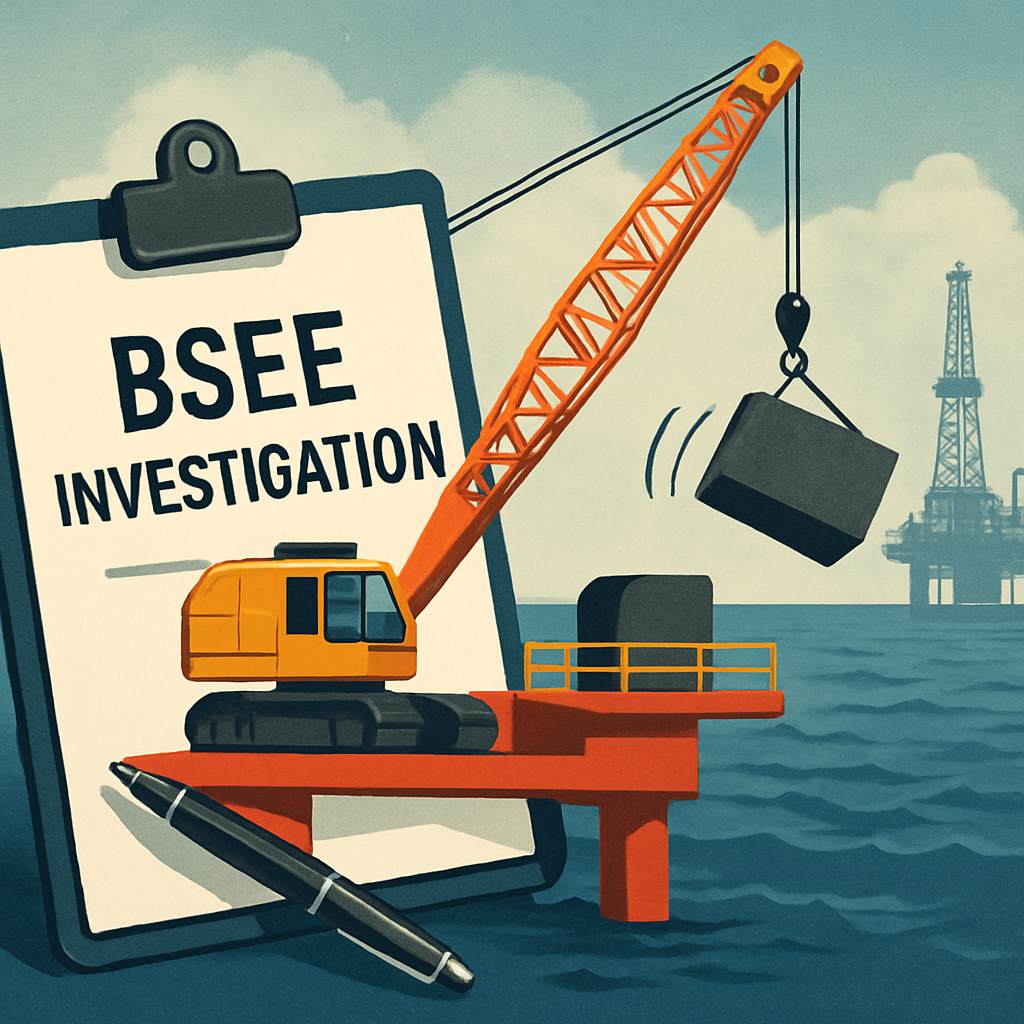
A recent investigation by the Bureau of Safety and Environmental Enforcement (BSEE) highlighted the importance of proper maintenance and inspections of cranes.
BSEE conducted an investigation into a crane incident on a lift vessel performing dismantling and diving work on an offshore platform. During the lift, the crane's counterweight, known as the anti-double block (A2B), detached from its mounting at the end of the boom.
The counterweight slid down the cable and struck the quick connect clamp, causing damage. The quick connect cable and the detached counterweight fell approximately 12 feet onto the vessel's deck.
A diver working nearby saw the falling components and attempted to evade the danger. As the diver turned away, the rebounding cable struck him on the right side of his body. Operations were immediately suspended, and personnel ensured safety in the incident area. The diver sustained minor injuries and did not seek medical attention.
The bureau's investigation determined that the quick connect cable failed due to internal corrosion in the clamp. Corrosion developed after annual maintenance was not performed according to company policy.
Investigators also found that a bent bolt led to the failure of the A2B, allowing the counterweight to detach and fall.
The impact of the falling counterweight on the clamp created a sudden, high-intensity force that exceeded the remaining strength of the weakened cable, leading to its rupture.
Inadequate inspections contributed to the incident, as they failed to identify the bent bolt, misalignment of the block, abnormal wear of the cable, or deterioration of the A2B prior to the incident.