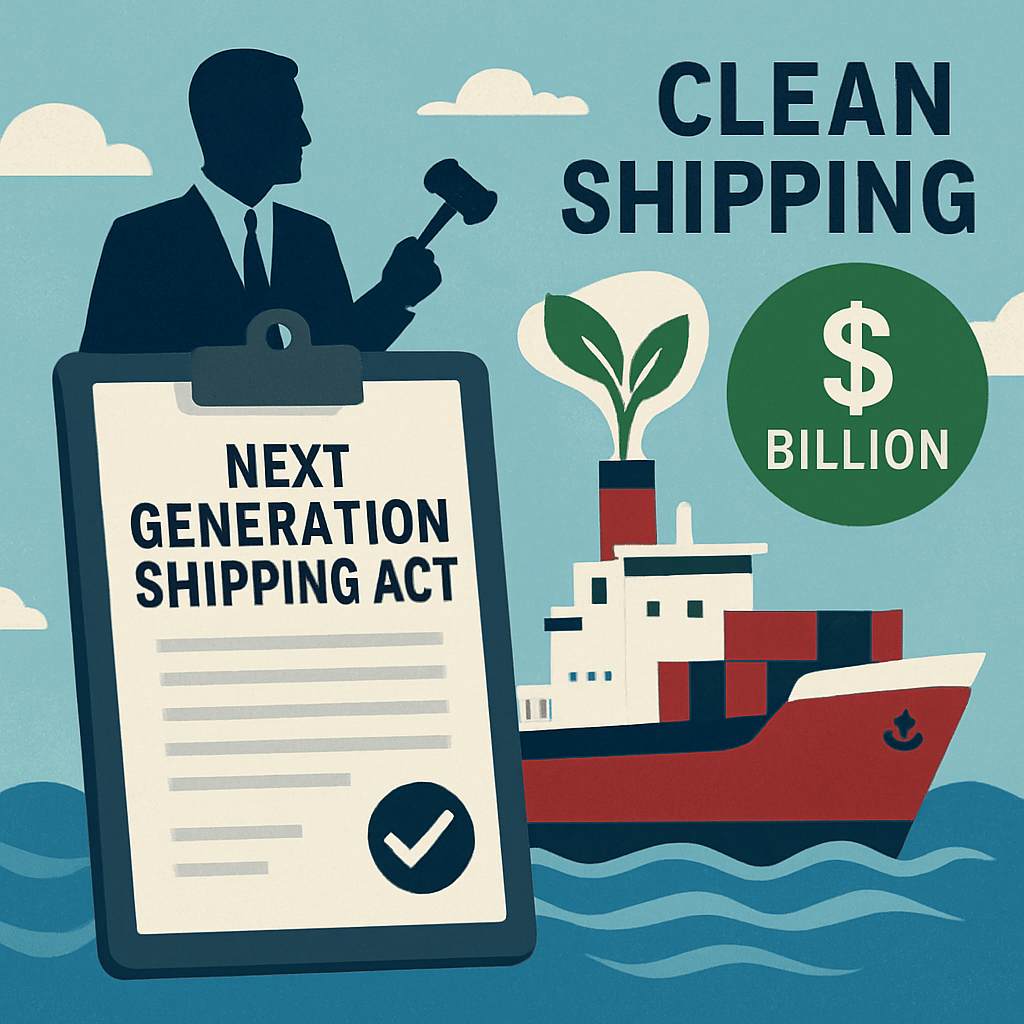
A group of American lawmakers has reintroduced a bill that will provide $1 billion annually to accelerate the development of clean shipping technologies and infrastructure.
The bill, titled Next Generation Shipping Act, was reintroduced on June 25 and is supported by Representatives Nanette Barragán (California), Troy A. Carter Sr. (Louisiana), and Senator Chris Van Hollen (Maryland). According to the proposal, the $1 billion per year program will be managed by the U.S. Maritime Administration (MARAD) and aimed at supporting the adoption of next-generation technologies in maritime operations.
The proposed funding will help promote zero-emission vessels, cleaner marine fuels, and modern port equipment while addressing greenhouse gas emissions and air pollution caused by shipping, particularly in port and coastal communities.
Lawmakers noted that the bill is also aimed at ensuring U.S. competitiveness amid significant investments in clean marine technologies from European and Asian countries. In addition to supporting decarbonization efforts, the bill aims to stimulate domestic innovation, create jobs, strengthen the U.S. maritime industry, and reduce dependence on foreign-developed technologies.
"Shipping plays a vital role in our economy, especially in the ports of Los Angeles and Long Beach, but it should not come at the expense of our families' health," Barragán commented.
Congressman Troy A. Carter added that the Next Generation Shipping Act will help maintain U.S. competitiveness by supporting zero-emission vessels, modernizing ports, and strengthening domestic shipbuilding while reducing pollution and creating jobs.
Senator Chris Van Hollen also emphasized the economic importance of the maritime sector, particularly the Port of Baltimore, noting that the bill will enhance U.S. competitiveness, modernize the country's maritime economy, support workforce development, and prepare the industry for future clean shipping requirements.
The bill provides the necessary funding to position the U.S. as a leader in developing next-generation vessel technologies and sustainable marine fuels, creating high-paying jobs and supporting workforce training.
Caroline Bonfield, senior climate policy manager at Ocean Conservancy, noted that the transition of the shipping industry to zero-emission technologies is essential for maintaining U.S. competitiveness in the global shipping market.
She concluded that the bill will provide resources for cleaner vessels, technologies, and infrastructure for charging or refueling, while also improving public health, protecting the environment, and supporting jobs related to the maritime industry.



%20scale(3)'%3E%3Cpath%20id='s'%20d='M0,-30%2017.63355,24.27051%20-28.53171,-9.27051H28.53171L-17.63355,24.27051z'%20fill='%23FF0'/%3E%3C/g%3E%3Cuse%20xlink:href='%23s'%20transform='translate(300,60)%20rotate(23.036243)'/%3E%3Cuse%20xlink:href='%23s'%20transform='translate(360,120)%20rotate(45.869898)'/%3E%3Cuse%20xlink:href='%23s'%20transform='translate(360,210)%20rotate(69.945396)'/%3E%3Cuse%20xlink:href='%23s'%20transform='translate(300,270)%20rotate(20.659808)'/%3E%3C/svg%3E)