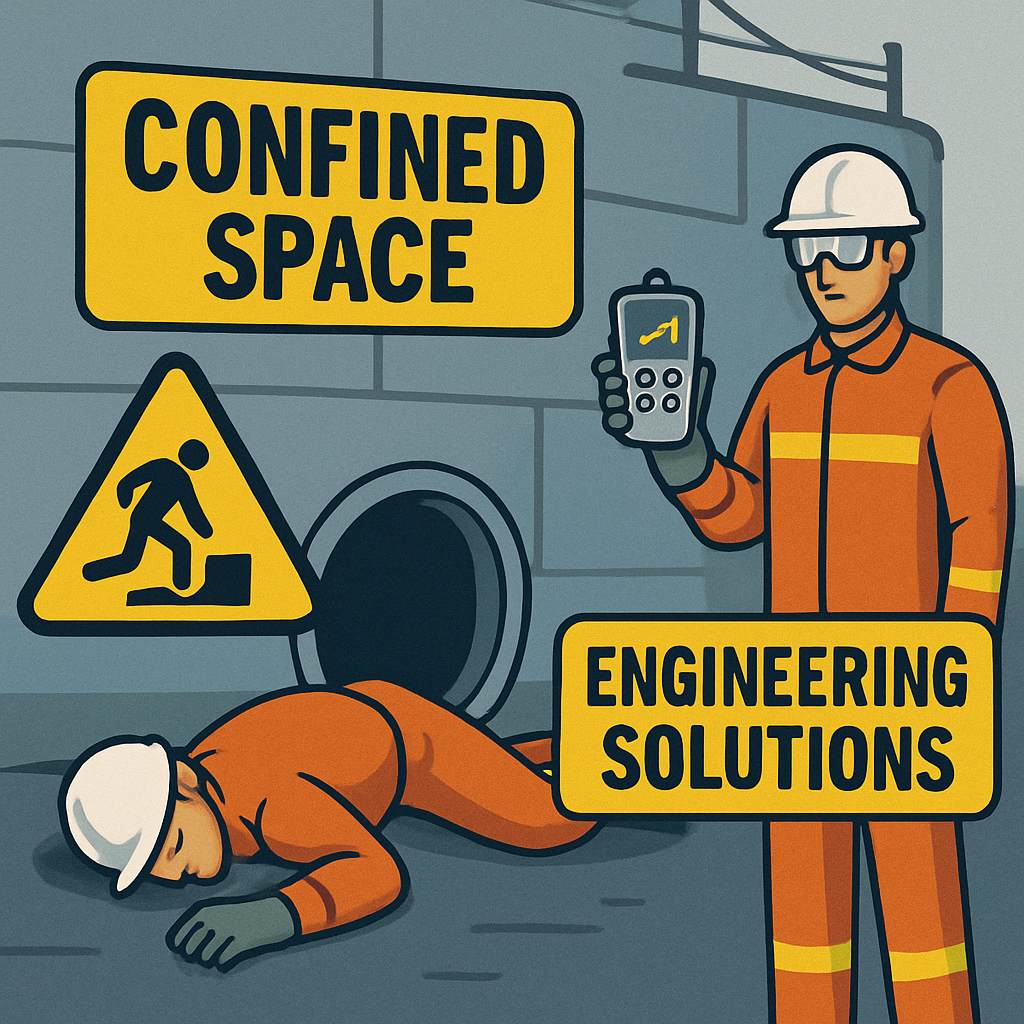
Procedures for working in confined spaces have existed for decades, yet lives continue to be lost. It is time to shift the focus from compliance to engineering solutions that prevent fatal mistakes before they occur, writes Pradip Chawla from MarinePALS.
There are risks in shipping that no one can misunderstand. Entering confined spaces is one of them. Every sailor knows that confined spaces can be deadly. Every operator is aware of the requirements. Permits, drills, checklists, and training modules already exist, and this message has been repeated in the industry for many years. Nevertheless, people continue to die in spaces they should not enter, or enter without the necessary precautions.
Therefore, the revised IMO roundtable on entry into confined spaces is important and welcomed. Any measure that enhances training, improves onboard checks, and strengthens safe practices deserves support.
At MarinePALS, we have updated our confined space training program, including our six-part video training series and CBT module, to reflect the revised recommendations.
But this should not become yet another wave of paperwork followed by another wave of reminders. We have been through this before. A serious incident occurs, an investigation confirms what went wrong, the industry repeats warnings, and crews are once again instructed to follow procedures. At some point, we must ask ourselves whether the procedures are strict enough.
This is not an argument against training, procedures, or regulation. They are necessary, and no responsible person would argue otherwise. But it is not the whole answer, because it all depends on the people who must make the right choice every time, even when they are tired, under pressure, working on routine, or surrounded by assumptions that the job is safe because it has been done before.
This is not a problem of sailors. It is a systemic problem. If we know that people can skip a step, cut corners, misunderstand risk, or become too accustomed to familiar work, then our safety systems must reflect this reality. We should not continue to add instructions and then be surprised when one of those instructions is missed somewhere in the world.
The next step must be to make unsafe entry more difficult from the outset. This means a more serious approach to finding engineering solutions, such as fixed gas detection systems, locking barriers that prevent entry into unsafe spaces, warning systems, design improvements that eliminate or significantly reduce the need to enter confined spaces, and other precautions that prevent a hazardous situation from developing before a person is in danger.
Training will always be important, but it must be supported by measures that do not rely solely on memory, judgment, and ideal behavior in moments of danger. The goal should not be simply to keep telling crews that confined spaces are dangerous, or to add more records and checklists. The goal should be to make it much harder to take the wrong action.
The revised roundtable provides the industry with a useful moment to update its approach, but it should also prompt us to be more honest about what has not worked. Deaths in confined spaces remain stubbornly difficult to eliminate because the answer too often focuses on what people should do, rather than how the system can prevent them from getting into such situations.



%20scale(3)'%3E%3Cpath%20id='s'%20d='M0,-30%2017.63355,24.27051%20-28.53171,-9.27051H28.53171L-17.63355,24.27051z'%20fill='%23FF0'/%3E%3C/g%3E%3Cuse%20xlink:href='%23s'%20transform='translate(300,60)%20rotate(23.036243)'/%3E%3Cuse%20xlink:href='%23s'%20transform='translate(360,120)%20rotate(45.869898)'/%3E%3Cuse%20xlink:href='%23s'%20transform='translate(360,210)%20rotate(69.945396)'/%3E%3Cuse%20xlink:href='%23s'%20transform='translate(300,270)%20rotate(20.659808)'/%3E%3C/svg%3E)