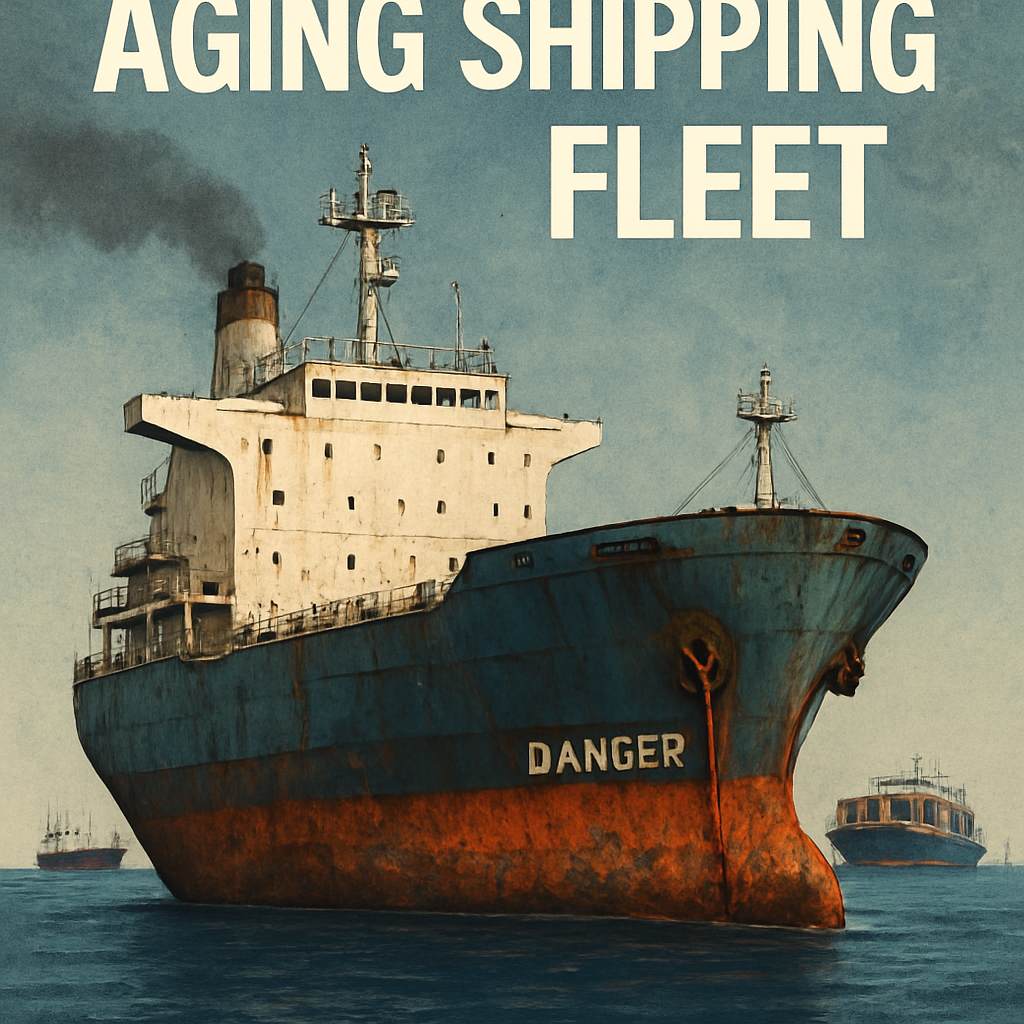
The global trade fleet is aging, and according to Allianz Commercial, this trend creates growing security risks as shipowners struggle to renew their fleets amid shipyard capacity shortages, geopolitical upheavals, and increasing regulatory demands.
In its 2026 Safety and Shipping Review, Allianz reports that the average age of the global trade fleet reached 23 years in 2025, while vessels older than 20 years now account for nearly a quarter of the global container fleet — the highest share in decades.
The insurance company warns that the aging fleet profile is no longer just an operational issue but is becoming an emerging safety concern.
“Older vessels can pose significant safety risks at sea, with ships over 20 years old accounting for more than half of all safety incidents,” Allianz stated.
“As vessels age, the likelihood of incidents increases due to structural, mechanical, and technological obsolescence, creating risks for crew, cargo, and the environment.”
These findings come despite a sharp improvement in overall safety in the shipping industry over the past decade. Allianz reported that the total number of vessel losses has decreased by 37% over the past five years compared to the previous five-year period, reflecting improvements in regulation, ship design, and risk management.
Nevertheless, the insurance company claims that today’s operational environment makes fleet renewal increasingly challenging.
“Ships older than 20 years now account for nearly a quarter of the global container fleet, the highest share in decades, as geopolitical volatility and limited shipyard capacity delay fleet renewal despite pressure on shipowners to scrap older vessels and replace them with new, more efficient, safer, and compliant ships,” the report states.
Shipyards remain overwhelmed with orders for new container ships, LNG carriers, and tankers, while the demand for upgrades to meet tightening environmental regulations further limits available slots for repairs and construction.
At the same time, shipowners face growing uncertainty regarding future fuel choices and emission standards, leading some operators to delay decisions on building new vessels while continuing to operate existing ships longer.
Container ships face fires every 17 days, as misdeclared cargo remains a serious threat.



%20scale(3)'%3E%3Cpath%20id='s'%20d='M0,-30%2017.63355,24.27051%20-28.53171,-9.27051H28.53171L-17.63355,24.27051z'%20fill='%23FF0'/%3E%3C/g%3E%3Cuse%20xlink:href='%23s'%20transform='translate(300,60)%20rotate(23.036243)'/%3E%3Cuse%20xlink:href='%23s'%20transform='translate(360,120)%20rotate(45.869898)'/%3E%3Cuse%20xlink:href='%23s'%20transform='translate(360,210)%20rotate(69.945396)'/%3E%3Cuse%20xlink:href='%23s'%20transform='translate(300,270)%20rotate(20.659808)'/%3E%3C/svg%3E)