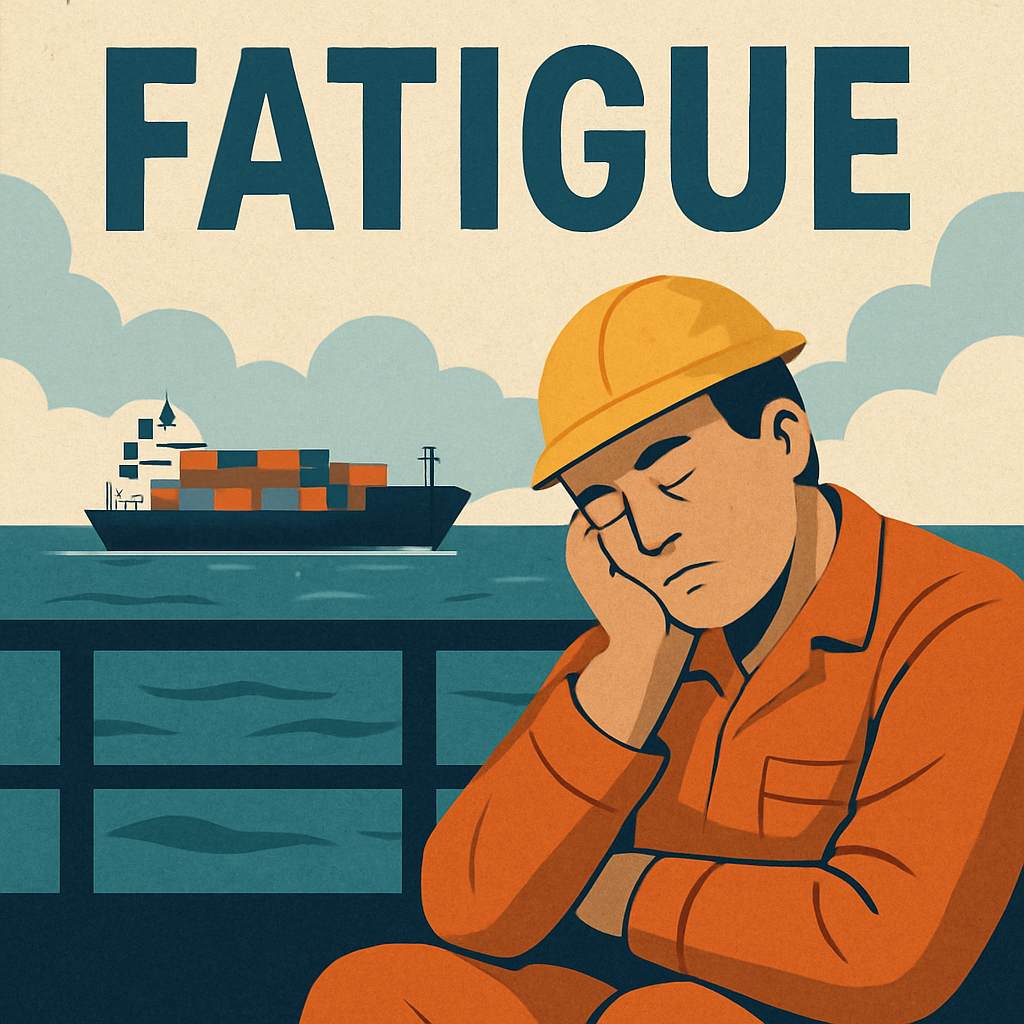
Adam Parnell, director of the maritime branch of the voluntary near-miss reporting scheme CHIRP Maritime, claims that fatigue is an uncomfortable truth of the maritime industry.
In recent months, CHIRP has received a number of reports where fatigue has been a factor, prompting Parnell to prepare a special report. "This could be one of the most important documents we have ever published, as the volume of reports received indicates that fatigue may be widespread. In some cases, fatigue has been observed even when working hours are in compliance with the working time and rest regulations," he noted.
Parnell emphasizes that fatigue cannot be controlled solely through paperwork and hopes that responsible companies will have procedures in place that allow employees to report their fatigue and temporarily step back from duties until they recover.
The report states that fatigue remains one of the most persistent and underreported risks in maritime operations. It rarely arises from a single long shift or a particularly tough week. More often, it develops gradually due to the constant impact of demanding schedules, insufficient recovery time, pressure from personnel, and a culture where "fitting in" becomes the norm.
CHIRP notes that many safe crew models have been developed based on assumptions that no longer reflect modern working conditions on vessels. Crew members now face increased mental and emotional strain, including constant communication with shore management, a 24-hour information environment, and growing administrative demands. Port operations are becoming faster, commercial schedules more rigid, and additional tasks are often imposed without an increase in personnel or time.
CHIRP continues to receive reports from people working night shifts suffering from disrupted sleep, increased stress, and decreased alertness. Several reports mention microsleeps, lapses in concentration, and fatigue-related incidents during routine tasks.
CHIRP has previously highlighted the tension between operational safety and commercial efficiency. In some cases, crew levels seem to be based on minimal legal requirements or financial metrics rather than the workload necessary for safe operations. When planning relies on people continuously "keeping on working," the system may already be operating beyond safe limits.



%20scale(3)'%3E%3Cpath%20id='s'%20d='M0,-30%2017.63355,24.27051%20-28.53171,-9.27051H28.53171L-17.63355,24.27051z'%20fill='%23FF0'/%3E%3C/g%3E%3Cuse%20xlink:href='%23s'%20transform='translate(300,60)%20rotate(23.036243)'/%3E%3Cuse%20xlink:href='%23s'%20transform='translate(360,120)%20rotate(45.869898)'/%3E%3Cuse%20xlink:href='%23s'%20transform='translate(360,210)%20rotate(69.945396)'/%3E%3Cuse%20xlink:href='%23s'%20transform='translate(300,270)%20rotate(20.659808)'/%3E%3C/svg%3E)