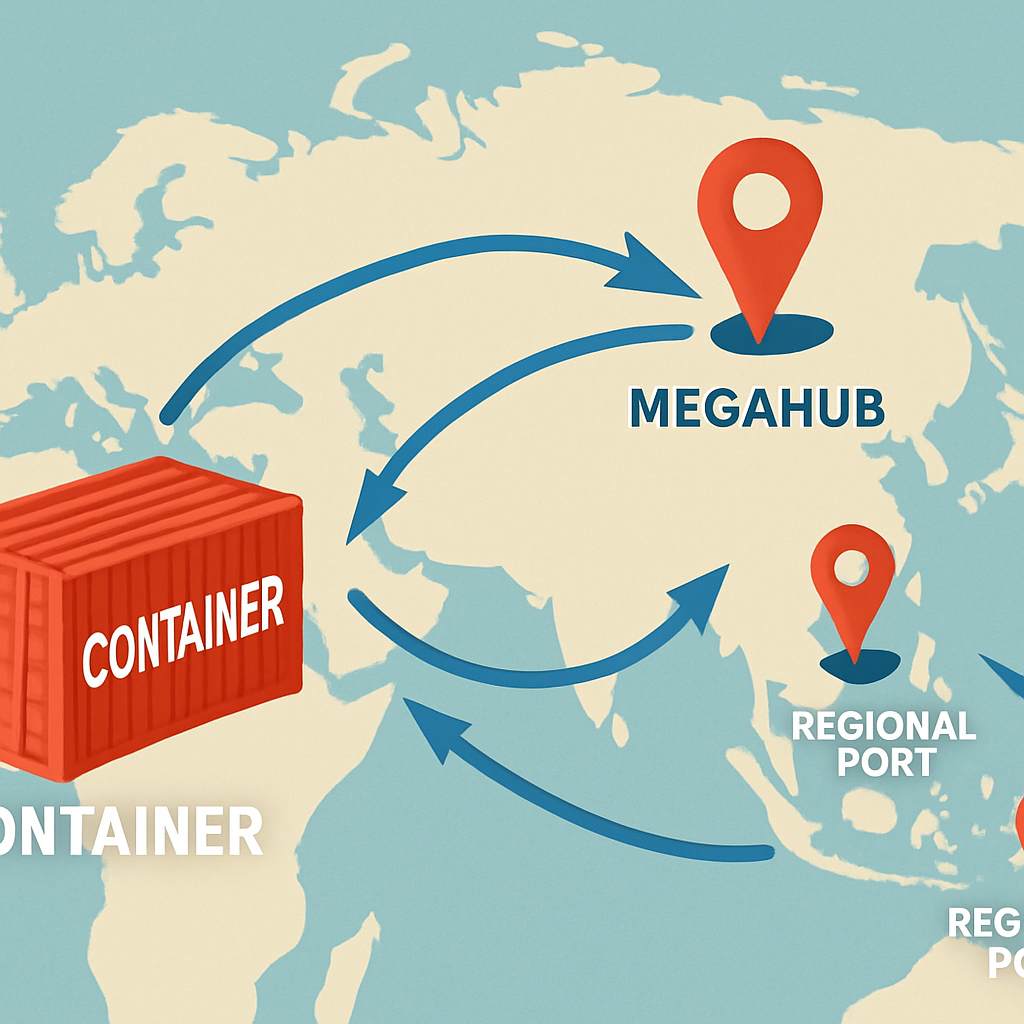
The traditional model of container shipping, based on hubs and spokes, is undergoing the most significant changes in recent years. Carriers are increasingly distributing their services, moving away from the largest transit hubs in Asia in favor of smaller regional ports.
According to an analysis by Sea-Intelligence based on the latest UN Container Port Connectivity Index (PLSCI), what started as a series of network adjustments triggered by the Red Sea crisis has evolved into a more permanent reorganization of container shipping networks.
Instead of concentrating services around megahubs like Singapore, Port Klang, and Tanjung Pelepas, carriers are increasingly routing cargo through secondary relay ports and export gateways located closer to manufacturing centers.
"PLSCI data for the second quarter of 2026 highlights a certain network overhaul," said Sea-Intelligence. "Shipping lines seem to be transitioning from initial crisis management to active decentralization of the network."
The connectivity index for Singapore fell from a peak of 1876.95 in the fourth quarter of 2025 to 1833.94 in the latest quarter. The two largest transit hubs in Malaysia also experienced sharp declines: Port Klang dropped by 5% from a recent peak, while Tanjung Pelepas fell by more than 7%.
Even the largest ports in China are feeling the changes: Shanghai and Ningbo recorded a decrease in the connectivity index compared to the previous quarter.
Haiphong emerged as one of the biggest winners, with its connectivity index rising to 690.29 in the second quarter, including a 5.1% increase compared to the previous three months. Sea-Intelligence claims that the Vietnamese port is benefiting from China+1 manufacturing strategies and close integration with southern Chinese supply chains.
Elsewhere, Laem Chabang in Thailand, Pipavav, Ennore, and Visakhapatnam in India, as well as Djibouti in East Africa, also recorded noticeable gains as carriers distribute relay cargo across a wider range of ports.
While the prolonged crisis in the Red Sea has reduced dependence on traditional regional hubs, carriers are increasingly focusing services around selected ports. Jeddah recorded a 14.9% increase in the connectivity index compared to the previous quarter, while Khor Fakkan showed an impressive growth of 189%. Fujairah, previously absent from the container connectivity rankings, has re-emerged as carriers experiment with alternative relay options.
Sea-Intelligence states in its latest weekly report that these changes are no longer temporary responses to geopolitical upheavals.
"As major transit hubs have reached connectivity limits, shipping lines are actively shedding excess capacity in megahubs in favor of secondary regional relays and specific gateways that directly support the diversification of cross-border supply chains," the consulting firm added.
For decades, container shipping has sought economies of scale by concentrating increasing volumes of cargo through a few giant hubs. The latest connectivity data suggests that this strategy is quietly changing, with resilience, flexibility, and proximity to production becoming increasingly important compared to sheer scale.



%20scale(3)'%3E%3Cpath%20id='s'%20d='M0,-30%2017.63355,24.27051%20-28.53171,-9.27051H28.53171L-17.63355,24.27051z'%20fill='%23FF0'/%3E%3C/g%3E%3Cuse%20xlink:href='%23s'%20transform='translate(300,60)%20rotate(23.036243)'/%3E%3Cuse%20xlink:href='%23s'%20transform='translate(360,120)%20rotate(45.869898)'/%3E%3Cuse%20xlink:href='%23s'%20transform='translate(360,210)%20rotate(69.945396)'/%3E%3Cuse%20xlink:href='%23s'%20transform='translate(300,270)%20rotate(20.659808)'/%3E%3C/svg%3E)