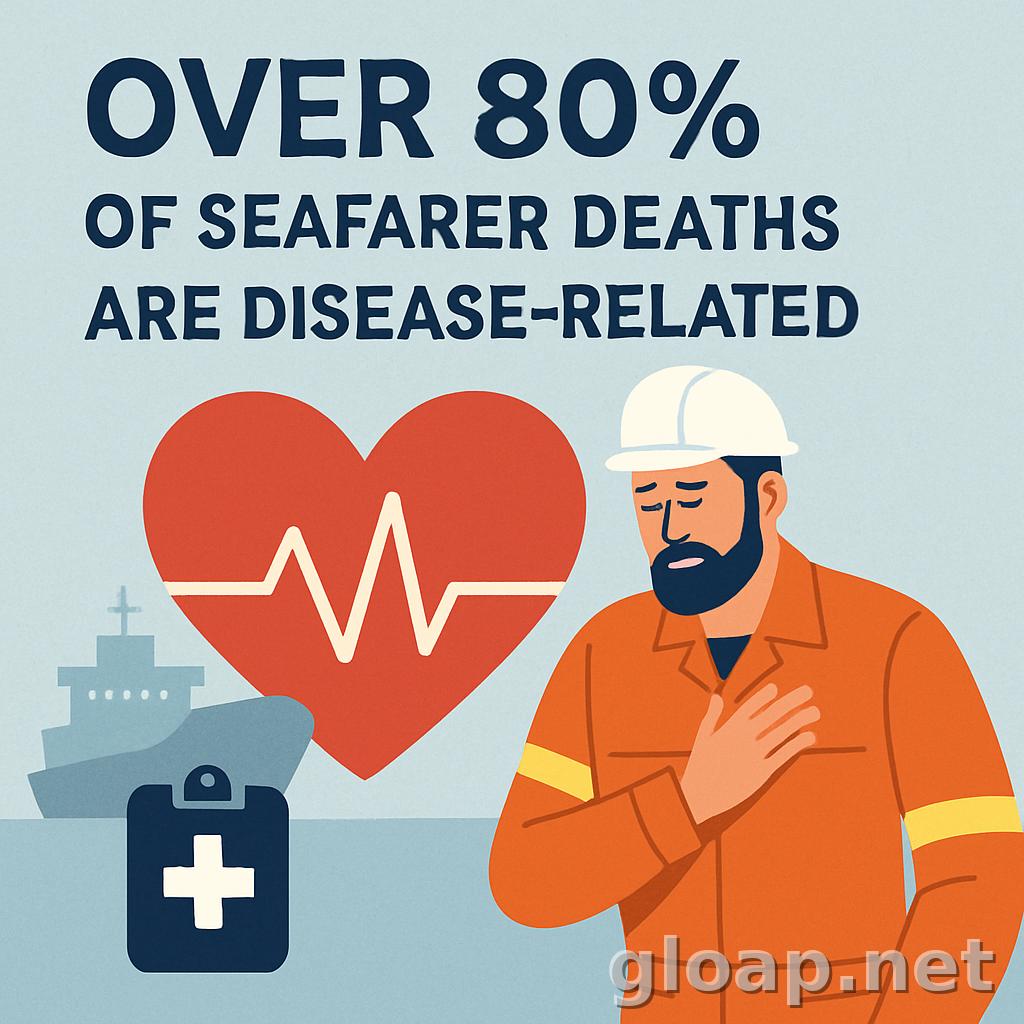
More than four out of five seafarer deaths in insurance cases reviewed by Britannia P&I were caused by illness rather than accidents. The main cause of death on board was cardiovascular disease.
Britannia's new claims report covering seafarers includes nearly 3,000 cases for insurance periods 2023/24 and 2024/25. According to the study, 81% of deaths were illness-related and 19% were injury-related. Cardiovascular diseases accounted for 58% of death claims related to illness.
In the overall mix of crew claims, illness made up 60%, injuries 36%, and fatal claims 4%. Earlier, ship manager Anglo-Eastern also reported that illnesses, injuries, and other incidents involving crew members dominate its current portfolio of shipowners' liability insurance claims.
Risks for younger seafarers
Britannia identified another concerning pattern: suicides and disappearances at sea disproportionately involved younger age groups of seafarers. Although the number of such incidents remains relatively small, a similar trend can also be seen in the club’s data over four years.
“Safety at sea is often viewed through the lens of accidents and operational incidents, yet our latest claims analysis shows a different reality,” said Britannia Head of Claims Prevention Jacob Damgaard.
Injuries and common illnesses
Risks of injury remain significant. Hand and finger injuries accounted for 27% of claims related to injuries. More than a third of fatal injury cases were associated with persons falling overboard.
Abdominal illnesses became the largest category of medical claims. Dehydration-related kidney stones among crews working in hot climates were identified as a specific issue.
The findings add to the ongoing discussion on the need for preventive healthcare at sea. Many common health problems become serious because of delayed treatment, and lack of privacy on board may discourage seafarers, especially younger ones, from seeking help.
Britannia believes the industry should pay more attention not only to accident prevention, but also to cardiovascular screening, routine health monitoring, and seafarers’ mental well-being.

 GLOAPM.COM