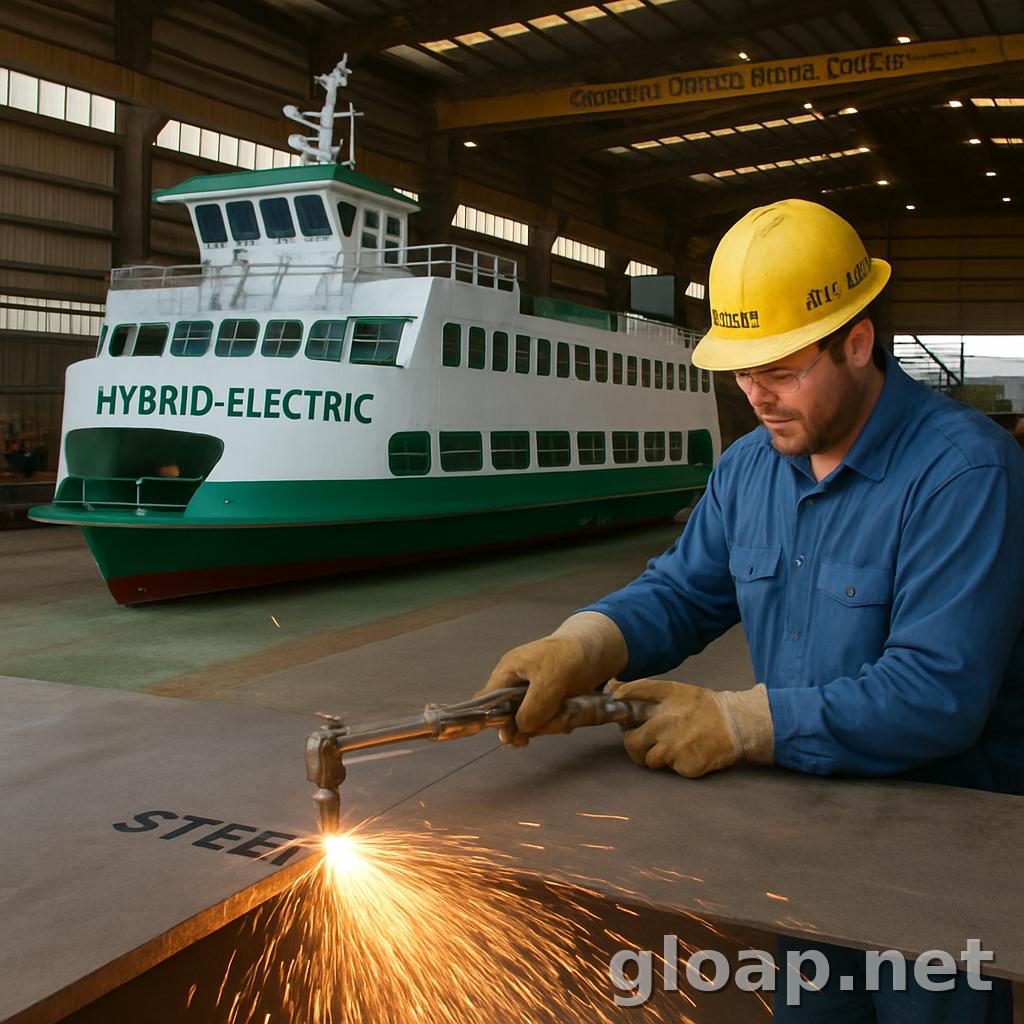
Washington State Ferries (WSF) after several years of preparation has officially started construction of a series of new hybrid-electric ferries. The steel-cutting ceremony took place at Eastern Shipbuilding Group's shipyard in Florida.
What was decided
WSF ordered three vessels with a capacity of 160 cars each from Eastern, and by choosing an extra line, the series was expanded by one additional option (one extra order that will now be built).
Management comments and the significance of the milestone
As WSF electrification program manager David Sours said, this is the first ferry construction in Washington state in ten years. According to him, after restoring local passenger service to full domestic operation, launching the project became an important step in rebuilding the fleet.
WSF said steel cutting is only the first step in a long production cycle: the first vessels are expected to enter service in 2030.
Why this is important for the ferry fleet
WSF's existing fleet is aging: more than half of the 21 active ferries are already older than 40 years. This is increasing reliability problems. The agency links fleet renewal not only with expanded capacity and upgraded equipment, but also with the benefits of electrification.
WSF also announced a plan to complete and procure up to 16 new vessels by 2040.
Why not in Washington
The decision to build outside the state caused differing interpretations locally. Previously, orders were placed in Washington. According to the governor's office, the only local offer was estimated at $1.51 billion for three ferries, about $200 million above the amount set in the project budget.
Eastern's bid came in about $360 million cheaper. Therefore, the state decided to choose the more economical option. The savings are planned to be used to help fund a fourth ferry, while noting that all funds for ferry repairs continue to go to local shipyards.
Previous plan and its end
The original 2019 proposal called for building five ferries with space for 144 cars and deliveries with participation from local shipyard Vigor Industrial. Deliveries were initially scheduled for this decade, but the program was shelved in 2022 after the per-vessel cost estimate turned out to be higher than the state had expected.

 GLOAPM.COM