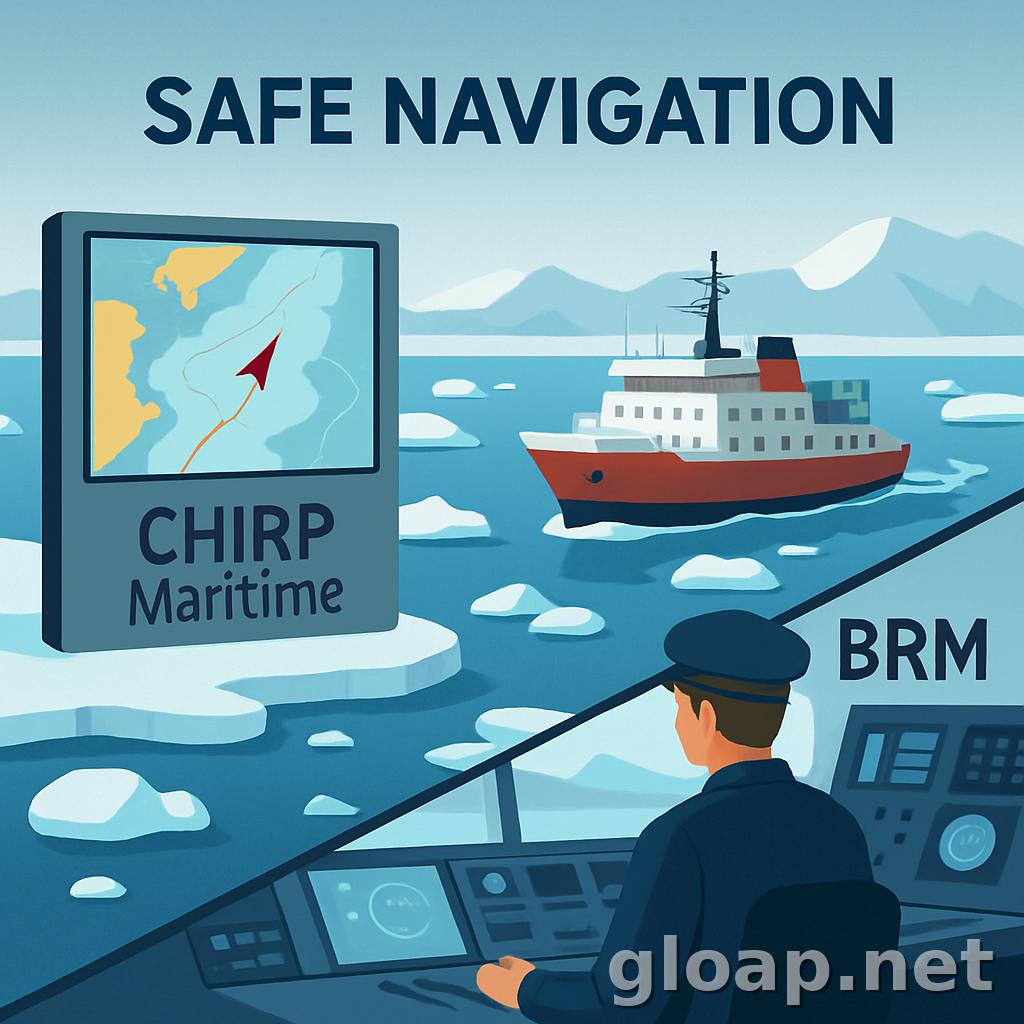
CHIRP Maritime in a new article highlights key lessons from an incident in polar ice, where a breakdown in the bridge resource management system (BRM) occurred on the bridge, leading to reduced situational awareness in conditions of rapidly changing ice.
According to the account, the expedition vessel, after completing routine operations, headed out to open water through a sector with an ice concentration of 6–7/10, where glacier ice, bergy bits and icebergs were present.
What happened on the bridge
On the bridge there were the captain, who was navigating the vessel, and the first mate, who supported it through a navigation system using sensor data (including GPS and sonar) to build a real-time three-dimensional bathymetric model.
The officer of the watch (OOW) was also involved. Importantly, it was his first voyage in polar waters, while the captain and first mate had ice-navigation experience.
No dedicated lookout was posted on the bridge: the assigned lookout at that time was on deck, handling support for the expedition boats.
Key incident factors
- The vessel did not follow a pre-developed passage plan.
- No stable track and contingency actions for worsening ice conditions had been agreed in advance.
- As ice density increased, free passages became fewer, and timing judgments were being made under growing workload.
- While maneuvering, the captain requested team input on a safe route.
- The first mate mainly relied on an electronic track built from another vessel’s previous path and advocated continuing on it.
- Separate icebergs were not accounted for on this track and were not identified in the situation assessment.
- The OOW used visual observation to look for alternatives, but his input was not fully taken into account in decision-making.
Conclusions
In the view of the report author, the incident clearly shows a combination of factors: overload from the complexity of the situation, excessive dependence on electronic sources, and insufficiently effective use of data from all bridge team members.
A major point in the CHIRP Maritime finding is that in polar operations, traditional skills and seamanship intuition should be combined with modern navigation. Electronic systems and historical tracks help build the picture, but do not confirm that a route remains safe at the present moment.
Ice movement, weather, visibility and glacier activity can change very quickly, so using multiple information sources and coordinated bridge teamwork is critical to preventing a deterioration in the situation.

 GLOAPM.COM