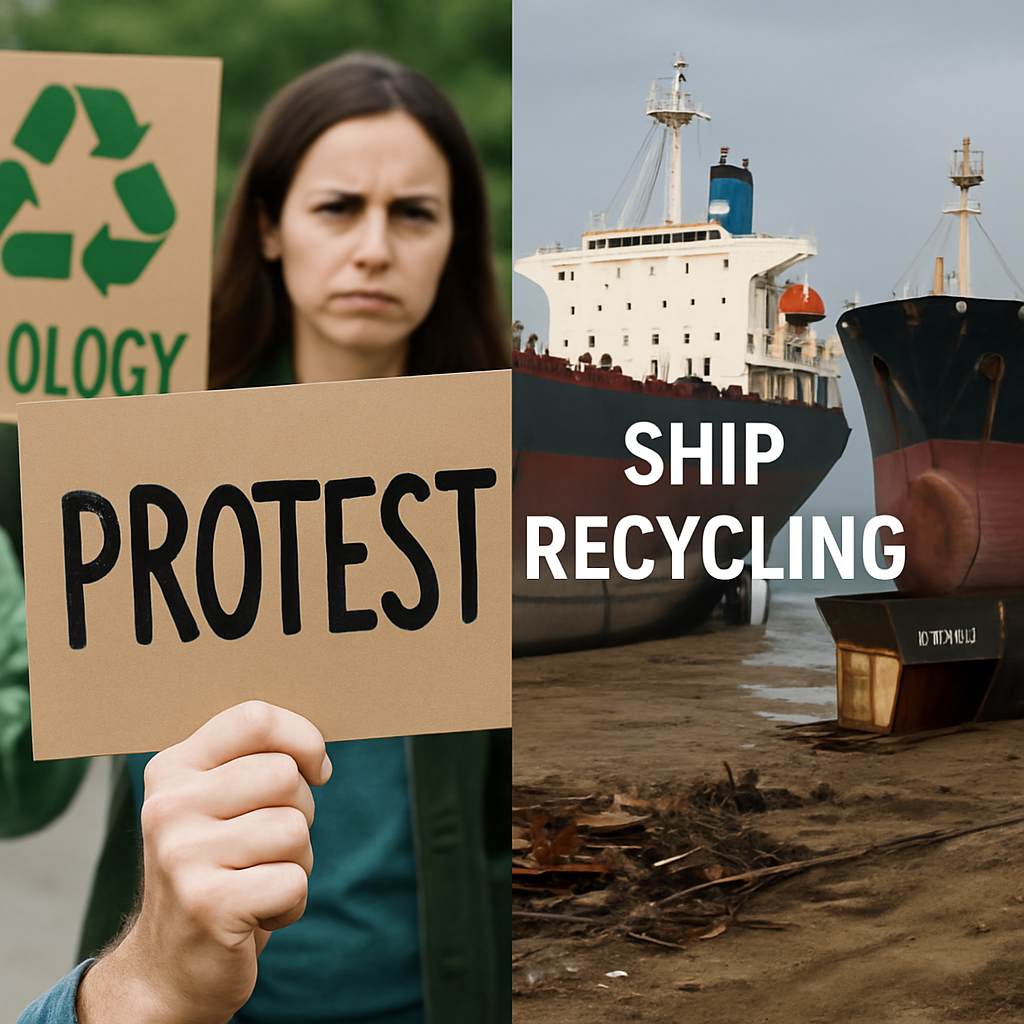
The European Commission has faced criticism from environmental activists following a proposal to include two Indian ship recycling yards in the approved list of EU shipbreaking facilities. Opponents argue that this move undermines the bloc's own environmental standards.
The NGO Shipbreaking Platform on Thursday urged the Commission to withdraw its proposal to include Shree Ram Vessel Scrap Pvt. Ltd./Shree Ram Shipping Industries Pvt. Ltd. and YSI Recyclers LLP, located in Alang, India, in the 16th update of the European list of shipbreaking facilities.
The proposal, published as part of a draft decision, concludes that both yards meet the requirements of the EU Ship Recycling Regulation and should therefore be added to the list. The annex to the draft states that both yards use the beaching method of recycling.
The proposal also removes several existing facilities from the EU list, including the Turkish yard Avsar Gemi Sökm, after Commission inspectors found repeated deficiencies, as well as the French recycler Recycleurs Bretons–Navaléo, Norwegian Green Yard Kleven AS, and Turkish Kiliçlar Geri Dönüşüm.
The EU Ship Recycling Regulation requires that large EU-flagged ships be recycled only at facilities included in the European list that are deemed to meet the bloc's environmental and labor standards. The regulation aims to comply with the Hong Kong International Convention for the Safe and Environmentally Sound Recycling of Ships. The current European list contains 41 approved ship recycling facilities in EU member states, Norway, the UK, Turkey, and the USA.
The NGO Shipbreaking Platform argues that approving beaching yards would represent a significant policy shift and weaken the intentions of the EU Ship Recycling Regulation, which was designed to ensure that EU-flagged ships are recycled at facilities that protect both workers and the environment.
The "beaching" method of recycling involves dismantling ships after they are beached on intertidal zones. Environmental groups argue that this practice makes it impossible to fully contain hazardous materials, allowing residues of oil, heavy metals, and other pollutants to enter coastal ecosystems.
The organization points to the heavy fuel oil spill at the Priya Blue shipbreaking yard in Gujarat in June as evidence that pollution cannot be effectively contained when dismantling occurs on tidal beaches. It also claims that Indian ship recycling operations continue to benefit from regulatory exemptions under India's coastal and environmental permitting system.
The group also argues that approving beaching yards would contradict the EU's obligations under the Basel Convention and its amendment banning the export of hazardous waste from OECD countries to states lacking adequate waste management capabilities.
However, the Commission's draft decision states that after reviewing the applications and supporting documents submitted under Article 15 of the Ship Recycling Regulation, it was determined that both Indian yards meet the requirements of Article 13 concerning the safe and environmentally sound recycling of ships.
The proposed update will also reflect several administrative changes, including updated permits for facilities in Denmark, Spain, and the Netherlands, updates following the entry into force of the Hong Kong International Convention for the Safe and Environmentally Sound Recycling of Ships, and revised approval procedures for Turkish recycling facilities.