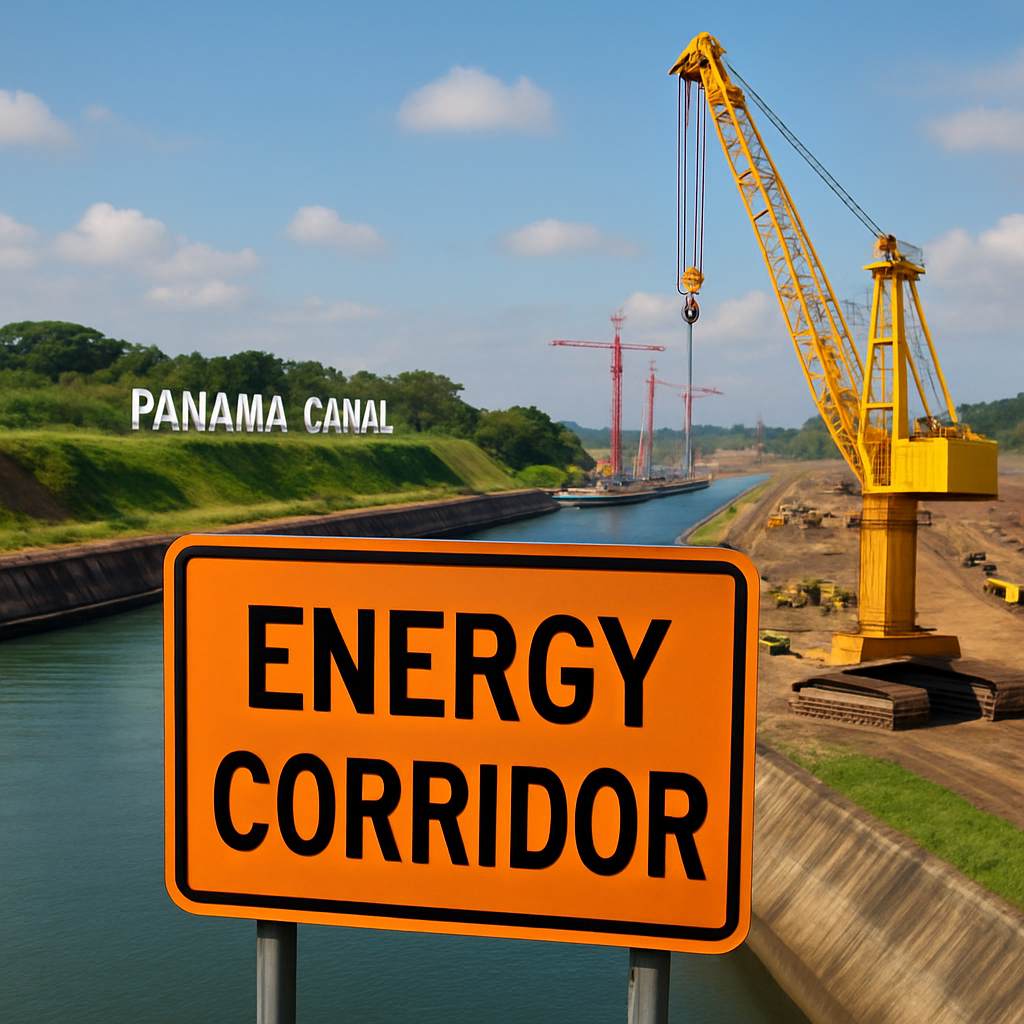
The Panama Canal Authority has completed the document submission phase for companies wishing to participate in the pre-qualification process for the proposed energy corridor, marking another step towards one of the most ambitious infrastructure expansions of the canal in recent decades.
The application window closed on July 23, and canal officials will now evaluate the submissions based on the legal, technical, and financial requirements outlined in the pre-qualification documents and subsequent amendments.
Upon completion of the review, the administration will publish a list of pre-qualified companies that will be able to move on to the next stage of the process, which will include further engagement and discussions with selected participants.
The energy corridor is a key component of the Panama Canal Authority's long-term strategy to diversify its business beyond traditional transits through the locks, while simultaneously strengthening Panama's position as a global logistics and energy hub.
"The proposal aims to develop opportunities that complement the Panama Canal, creating avenues for companies to participate in strategic projects that promote economic growth and competitiveness in Panama," the administration stated while announcing the latest phase.
The pre-qualification process, launched on January 30, followed the concession rules of the Panama Canal Authority. Since then, officials have conducted a clarification period, issued three amendments to the tender documentation, and received submissions from interested companies. Canal officials assert that the process is aimed at ensuring transparency and fair competition among qualified participants.
At the heart of the initiative is a proposed 76-kilometer (47-mile) pipeline capable of transporting propane, butane, and ethane between Panama's Atlantic and Pacific coasts. The system is expected to handle up to 2.5 million barrels per day, completely bypassing the canal locks and not requiring fresh water, as climate change continues to threaten the canal's operations.
Canal Administrator Ricaurte Vásquez has previously described the project as a strategic opportunity to capitalize on the growing global demand for energy transportation.
The proposal has attracted interest from major energy companies, including ENEOS, Energy Transfer, ExxonMobil, Enterprise Products Partners, Chevron, Phillips 66, Targa Resources, and ONEOK, all of which have participated in previous market engagement sessions.
The energy corridor is part of a broader infrastructure strategy that also includes new container terminals on both coasts — Atlantic and Pacific.
These projects aim to add between 5 to 6 million TEU of annual transit capacity, while simultaneously strengthening Panama's position as one of the leading logistics hubs in the world. The terminals are expected to require investments of around $2.6 billion and create thousands of jobs both during construction and on a permanent basis.