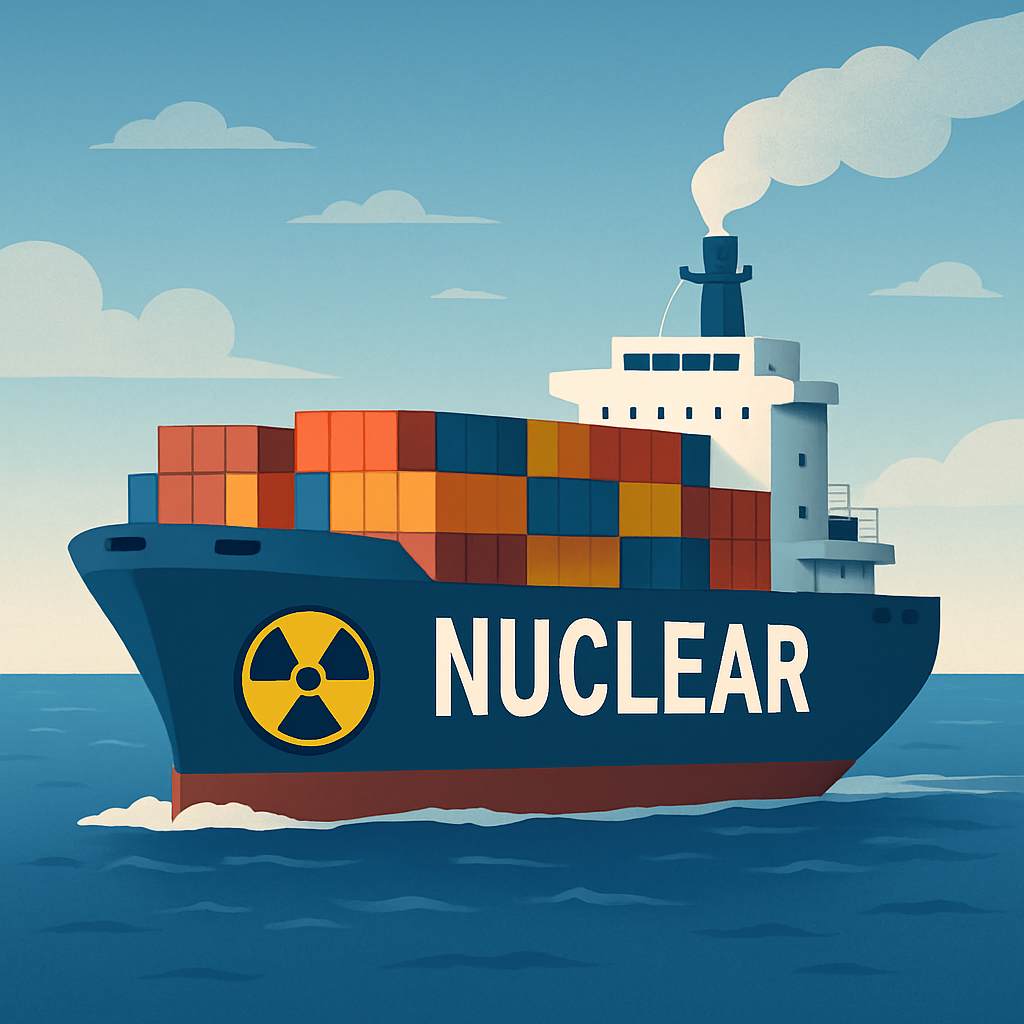
Nuclear shipping is approaching practical implementation as governments, regulators, and industry participants ramp up efforts to define the future role of this technology in maritime transport, according to Lloyd's Register (LR).
During a roundtable at the Posidonia 2026 exhibition, LR highlighted the growing interest in developing nuclear propulsion for commercial shipping. Participants discussed the need for a global regulatory framework that could keep pace with technological advancements.
Industry representatives noted that regulations should evolve alongside reactor technologies rather than waiting for projects to reach full maturity. Establishing clear safety and operational standards at early stages, they said, will be critically important for the potential deployment of nuclear-powered vessels in the maritime sector.
Karin Ervieu, Deputy Director General of the International Atomic Energy Agency (IAEA), emphasized the importance of regulatory certainty as technologies develop. "This is a very important conversation. One of the main issues is the need to create an international framework to ensure predictability in regulation," she said.
The discussion also reaffirmed the importance of collaboration between the maritime and nuclear industries, recognizing that progress will depend on the joint efforts of regulators, technology developers, and operators from early stages.
In addition to regulation, participants considered the commercial realities of nuclear vessels, including investment models, operational economics, and potential competitive advantages for early adopters.
Despite significant challenges, the discussions reflected a growing readiness to explore how nuclear energy can complement other zero-carbon pathways in the coming decades.
"We have heard about the need for rapid regulatory emergence as small modular reactors are expected to reach critical levels in the coming months," participants added.
Efforts to bring nuclear shipping closer to commercial reality are gaining momentum, with regulators and industry participants working to create the necessary frameworks, technologies, and infrastructure to support future deployment.
A key focus of these efforts is the ATLAS initiative (Atomic Technologies Licensed for Applications at Sea), which aims to develop a framework for the safe and reliable use of civil nuclear technologies in marine applications. The initiative addresses critical issues related to regulation, safety, and assurance while the industry explores the potential of nuclear propulsion.
Progress is also being observed at the International Maritime Organization (IMO). During the NEMO workshop, the IMO stated that it expects to adopt a new nuclear code by 2032, four years earlier than previously anticipated.