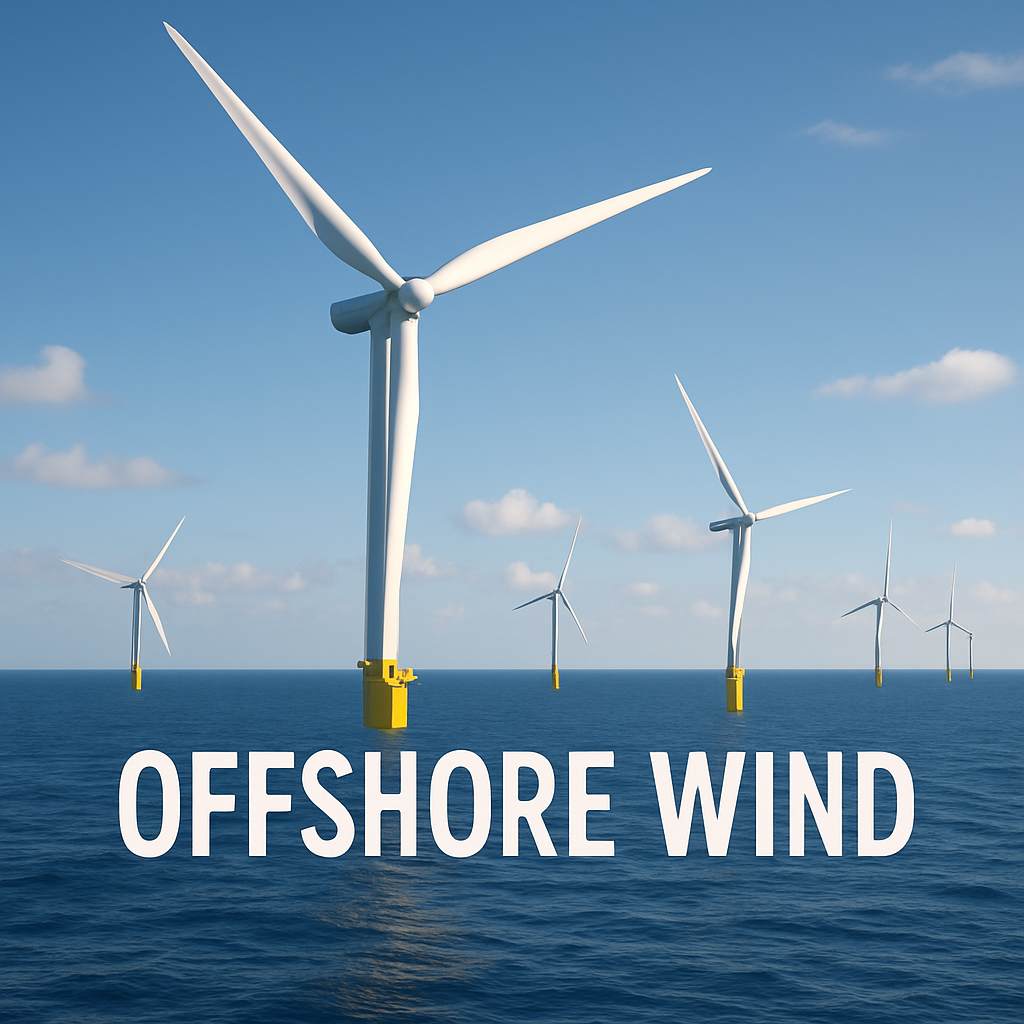
According to a new WWF briefing, Europe can significantly increase its offshore wind energy capacity without compromising the interests of other marine space users.
The analysis showed that to meet the EU's offshore wind energy targets, a minimal area of only 0.19% of EU seas will be required by 2030, increasing to 0.58% by 2040. This leaves a large portion of the seas available for marine conservation, fishing, and other needs.
According to the World Wildlife Fund (WWF), the EU is facing growing pressure to rapidly expand offshore wind energy to meet climate goals and reduce dependence on unstable fossil fuel imports. However, progress is slower than expected.
At the same time, tensions at sea are rising, and some representatives from the fishing sector express concerns that offshore wind installations are displacing other activities. However, new analysis shows that these concerns may be exaggerated.
Only four EU member states will need more than 5% of their marine space for offshore wind energy by 2040, indicating that claims from some fishing industry representatives about a lack of space at sea cannot be attributed to offshore wind energy or marine conservation.
"The idea that Europe's seas are 'full' is a myth. Offshore wind energy will occupy less than 1% of EU waters, and even with the EU's target of protecting 30% of its seas, almost 70% remains available for other needs. With more effective marine spatial planning and sensitivity mapping, we can ensure the coexistence of offshore wind energy, nature, and coastal livelihoods," said Aliki Kolovou, marine policy specialist at WWF EU.
Instead of a lack of space, the report identifies weak spatial planning and fragmented decision-making as the main issues behind delays and conflicts.
To address this issue, WWF calls for strategic environmental assessments (SEA) to be made mandatory and for sensitivity maps at the EU level to be systematically integrated into them. This approach uses ecological data to identify both the most valuable areas for biodiversity protection and those where development can occur with the least impact.
Implementing these enhanced SEAs into the Marine Spatial Planning Directive will allow EU member states to identify the least sensitive areas and designate them for offshore wind energy and other blue economy activities while ensuring the protection of the most valuable areas, helping the EU achieve its 30% target.
This will also benefit fishermen, as well-managed marine protected areas help restore fish populations, allowing them to grow and reproduce more effectively and creating a "spillover" effect.
This kind of strategic planning at early stages can simplify offshore wind energy projects, shorten lengthy permitting processes, reduce negative reactions and the risk of deployment delays, while keeping environmental assessments as a key tool without weakening environmental measures.
"With the upcoming Marine Law, the European Commission has a unique opportunity to correct its planning process and allocate enough marine space for offshore wind energy and marine conservation. By enshrining marine ecological and climate goals in law, the Commission can ensure that our shared seas contribute to meeting all our needs as a society," Kolovou added.