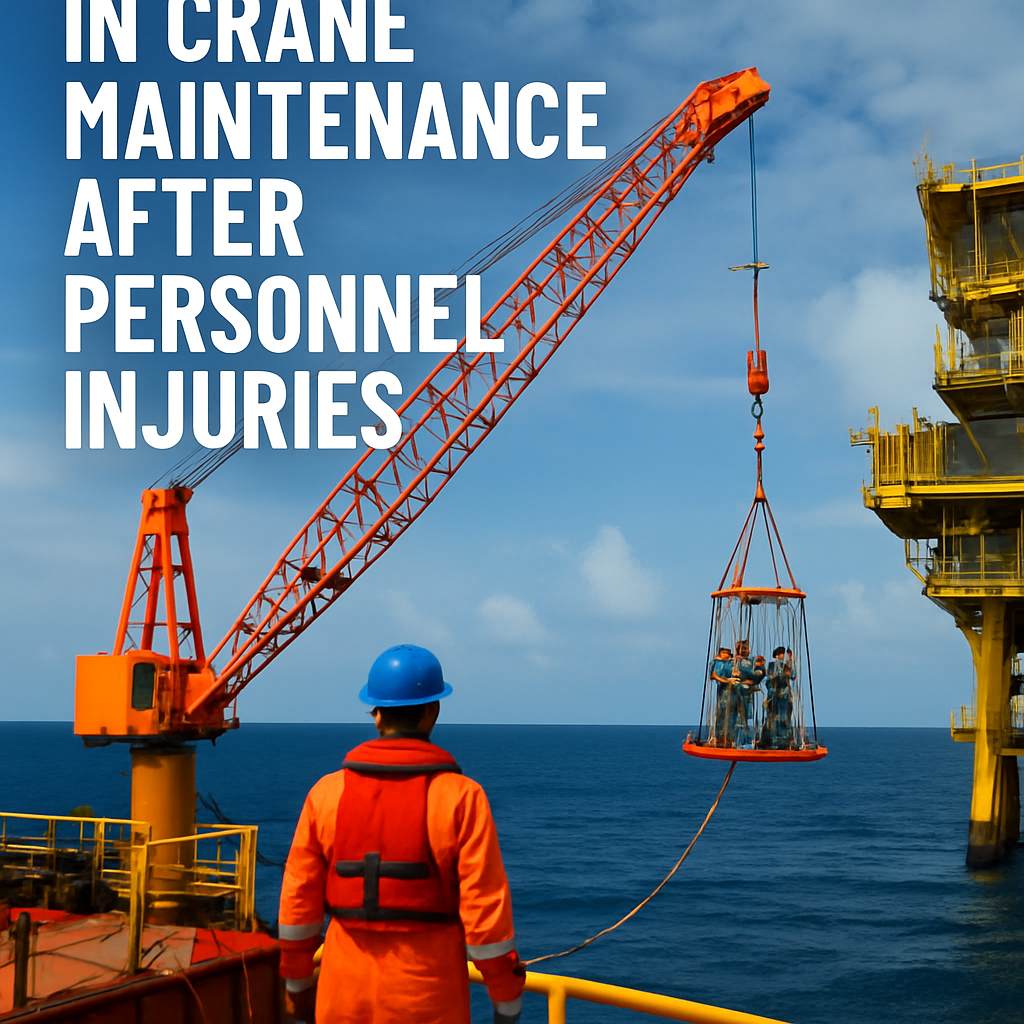
The Bureau of Safety and Environmental Enforcement (BSEE) conducted an investigation into two incidents involving injuries to offshore workers during personnel transfers using baskets.
In both cases, the crane's auxiliary line unexpectedly descended while personnel were being transferred between the offshore facility and the motor vessel. These incidents highlight the importance of timely maintenance, addressing known deficiencies, exercising stop-work authority, clear communication during transfers, and planning for medical evacuations before work begins.
Incident 1
During a personnel transfer, the crane operator was lowering a worker in a basket onto the deck of the motor vessel when the auxiliary line suddenly and uncontrollably dropped 6-15 feet before stopping approximately 25 feet above the water. The worker remained in the basket but sustained back and leg injuries. He required medical evacuation via stretcher.
Several attempts to evacuate the worker by helicopter were unsuccessful due to misunderstandings regarding the type of aircraft operating in the field and its capability to accommodate a stretcher. The injured worker was moved to the platform's helipad before it was determined that the helicopter could not accept a stretcher. The worker was then transferred to the dock and handed over to the motor vessel. Personnel from a neighboring facility were brought in to assist with the evacuation. The evacuation on the motor vessel occurred several hours after the incident.
BSEE's investigation identified several contributing factors to the incident, including inadequate maintenance of previously identified and unaddressed deficiencies in the assembly of the auxiliary boom and bearing, possible contamination of the dead loop of the auxiliary line on the anti-twin device (ATB), inadequate documentation and resolution of previously identified crane deficiencies, and insufficient planning and emergency response procedures.
Incident 2
During another personnel transfer using a platform crane and basket, three workers were injured when the crane experienced repeated uncontrolled, rapid descents. As the basket cleared the railing, it suddenly dropped approximately 1 foot. Personnel inside the basket noticed abnormal movement, and one of the passengers lost their balance. The personnel in the basket attempted to signal the crane operator about the problem, but the operator continued to lower the basket onto the motor vessel below.
As the basket approached the deck of the motor vessel, the crane operator lost control of the descent. The basket quickly fell another 6-7 feet and landed abruptly on the deck of the motor vessel, injuring the personnel. After the incident, the crane was not immediately taken out of service.
The crane operator later attempted to use the crane's auxiliary line for diesel refueling operations. The auxiliary brake slipped again, leading to the uncontrolled descent of the diesel tank. The crane operator then took the crane out of service.
BSEE's investigation revealed that the uncontrolled descent was caused by a loss of braking control on the auxiliary line due to the need for adjustment of the auxiliary hoist brake system. A weakened brake band allowed the hoist drum to rotate under load, resulting in the uncontrolled descent of the basket and diesel tank. The facility personnel did not exercise stop-work authority after the first uncontrolled descent.



%20scale(3)'%3E%3Cpath%20id='s'%20d='M0,-30%2017.63355,24.27051%20-28.53171,-9.27051H28.53171L-17.63355,24.27051z'%20fill='%23FF0'/%3E%3C/g%3E%3Cuse%20xlink:href='%23s'%20transform='translate(300,60)%20rotate(23.036243)'/%3E%3Cuse%20xlink:href='%23s'%20transform='translate(360,120)%20rotate(45.869898)'/%3E%3Cuse%20xlink:href='%23s'%20transform='translate(360,210)%20rotate(69.945396)'/%3E%3Cuse%20xlink:href='%23s'%20transform='translate(300,270)%20rotate(20.659808)'/%3E%3C/svg%3E)