


%20scale(3)'%3E%3Cpath%20id='s'%20d='M0,-30%2017.63355,24.27051%20-28.53171,-9.27051H28.53171L-17.63355,24.27051z'%20fill='%23FF0'/%3E%3C/g%3E%3Cuse%20xlink:href='%23s'%20transform='translate(300,60)%20rotate(23.036243)'/%3E%3Cuse%20xlink:href='%23s'%20transform='translate(360,120)%20rotate(45.869898)'/%3E%3Cuse%20xlink:href='%23s'%20transform='translate(360,210)%20rotate(69.945396)'/%3E%3Cuse%20xlink:href='%23s'%20transform='translate(300,270)%20rotate(20.659808)'/%3E%3C/svg%3E)
A Floating Response to the Challenge of Green Steel
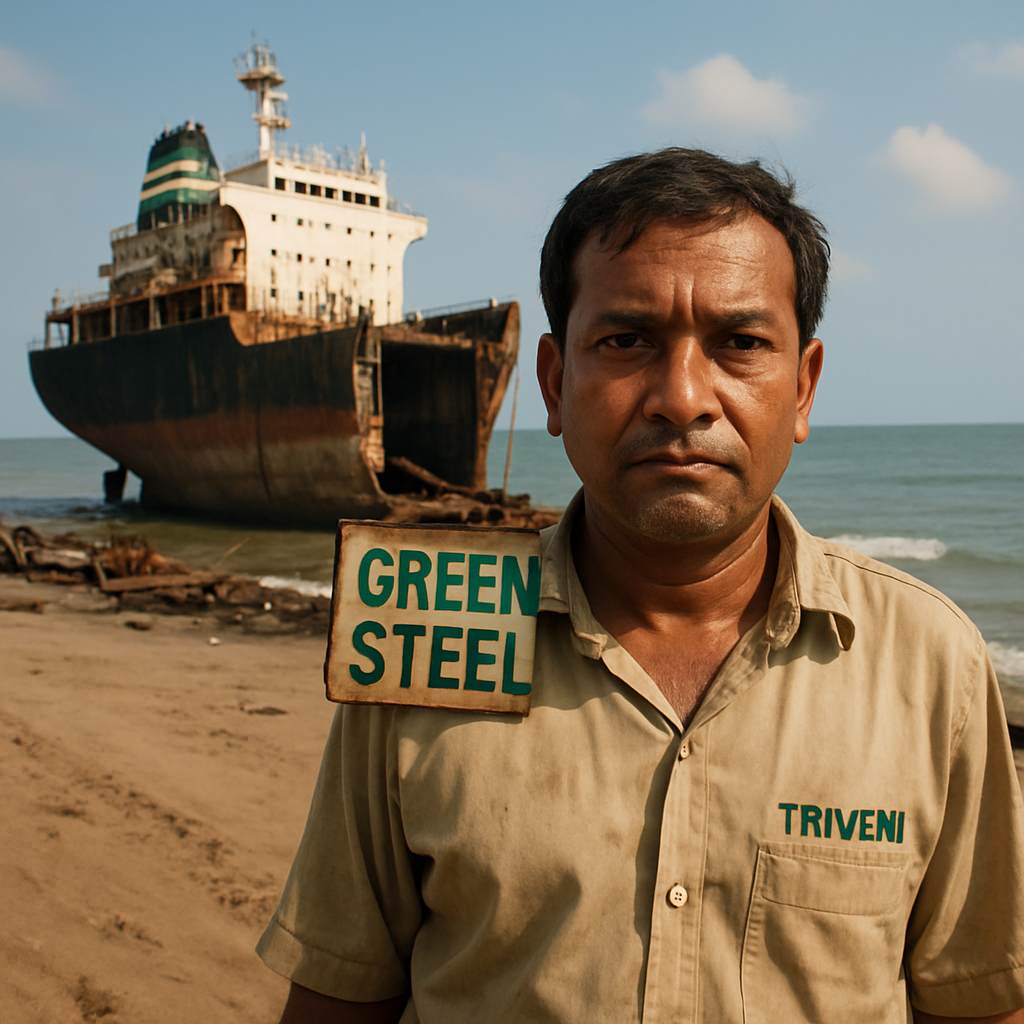
Rushi Kanakya recycles ships on a 50-meter beach overlooking the sea in Alang, India. Since 1985, his family business Triveni Shipbreakers has been accepting and dismantling old vessels here, at the world's largest shipbreaking yard. Triveni is capable of recycling about 2,000 metric tons of steel each month.
According to 2019 estimates, ships contain a colossal amount of steel: over 500 million tons.
According to the NGO Climate Group, around 150 shipyards in Alang can recycle about a third of all decommissioned vessels in the world. They can simultaneously work with 4.5 million metric tons of ships, claims the Alang World platform. From the recycled steel, shipyards send back 75-85% of the weight of the vessel to the shipbuilding, construction, and automotive industries.
With the growing interest of countries and steel producers in reducing emissions in this sector, shipbreaking has been highlighted as a promising source of scrap steel. This scrap can be used to produce steel in electric furnaces, which emit less than the coal processes used for primary steel production.
Kanakya claims that "the recycling capabilities for these vessels already exist, and there is no need for multi-million dollar investments," unlike other approaches to reducing industrial emissions, such as carbon capture and greener fuels.
In the next decade, about 16,000 ships will require recycling, which is double the number from the previous decade. This could potentially release nearly 700 million tons of ships and their steel content into the market.
However, currently, Kanakya's yard remains idle: "We hire about 120 people, but that’s when we are working. We haven’t had a ship for over four years now." His situation reflects a complex picture where markets, international trade, and politics complicate the flow of ships to yards and scrap steel from ships to industry.
Most ships in the world are dismantled and recycled far from the countries where the companies that own them are located. Europe is the largest owner of the global fleet, holding over a third of all vessels, but only 1% of them are recycled on the shores of the European Union. More than 80% of the global fleet is recycled in South Asia, mainly in India, Pakistan, and Bangladesh, where ship owners are attracted by higher payouts for steel.
This has concentrated vast amounts of scrap steel in certain locations and contributed to the development of large domestic industries. In Bangladesh, 40% of steel production comes directly from scrap salvaged from shipbreaking yards. In Europe, a significant amount of low-grade scrap steel is exported, while the export of high-quality scrap from some sectors is restricted. Nevertheless, the continent continues to lose a large amount of quality steel in the form of old ships, which are viewed more as waste than as a resource.
Several factors are now changing the status and demand for recycled steel from ships.
Steel production contributes about 11% to global CO2 emissions, and the pressure to use more scrap in production is increasing, which could reduce emissions by 80-90% compared to the traditional blast furnace method. Some steel producers are investing in building electric arc furnaces that can operate on 100% recycled steel. Blast furnaces can only use up to 20% scrap and otherwise require coal-based iron ore processing.
The quality of steel products from ships is particularly attractive to the industry: "When large steel producers are looking for scrap, they start paying attention to ship recycling because one ship contains thousands of tons of steel, and it is high-quality steel," says Henning Gramann, an international expert on green ship recycling and a visiting professor at the World Maritime University in Sweden.