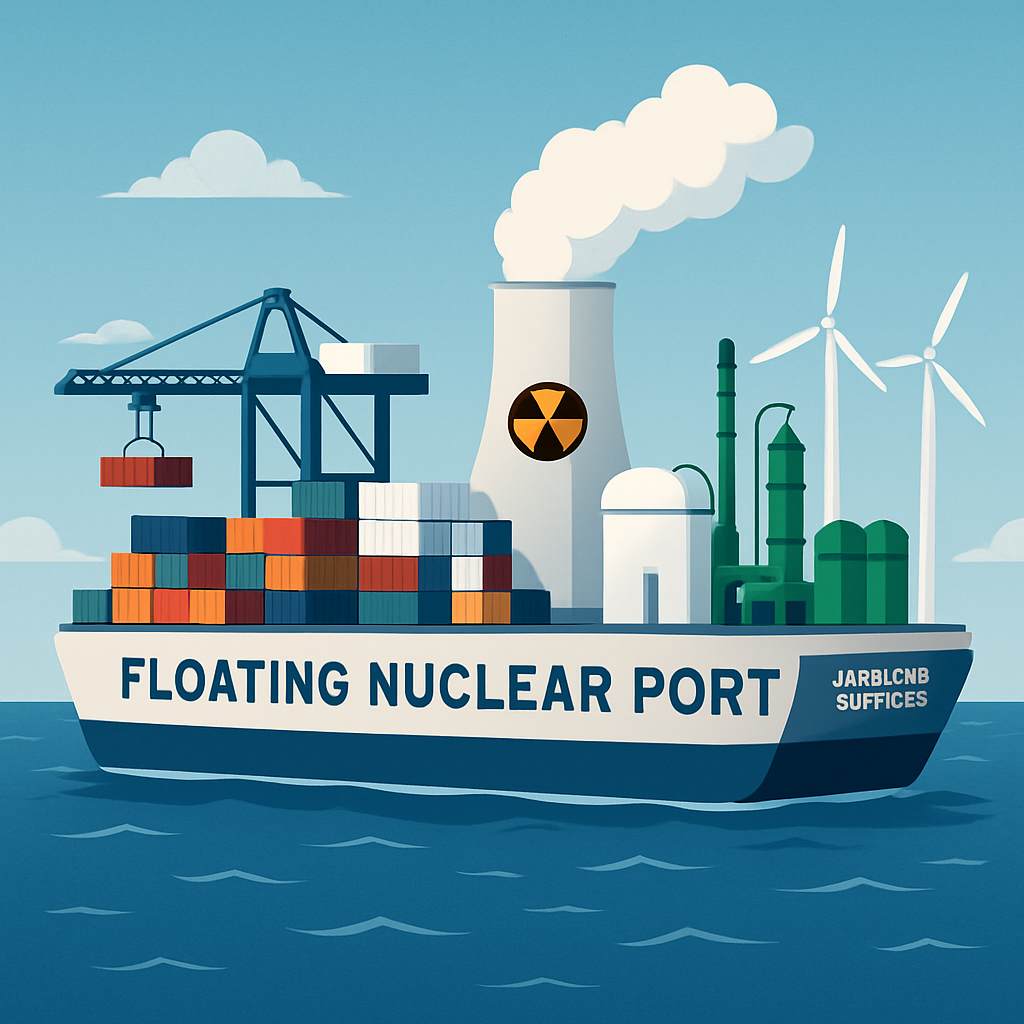
At the Posidonia exhibition in Athens, the Chinese shipbuilding company Jiangnan Shipyard unveiled an innovative concept: a floating nuclear logistics hub that will serve as a container terminal, power plant, and green fuel production facility at sea.
This idea, according to expert Wolfgang Lemahere, could revolutionize global trade and serves as a reminder of how seriously the shipping industry is taking decarbonization. The concept offers a solution for reducing carbon emissions by combining energy generation, fuel production, and cargo handling in one location, thereby minimizing energy losses and eliminating the need to transport green fuel from land.
According to the new operational model, large container ships will be unloaded at a nuclear platform located 200 nautical miles offshore, while smaller auxiliary vessels will deliver cargo to the shore gates. This will help avoid port congestion and shallow waters, as well as provide clean energy for the hub and its vessels.
However, the implementation of this concept faces significant challenges. The main issues are not only technical aspects, such as resilience to severe storms and the safety of the nuclear reactor, but also the lack of clear international norms and regulations for floating nuclear installations. Licensing, customs control, and liability issues in the event of an accident remain unresolved.
The Chinese concept highlights the need for the industry to work together to create a safe legal framework that will enable such innovations in the future.