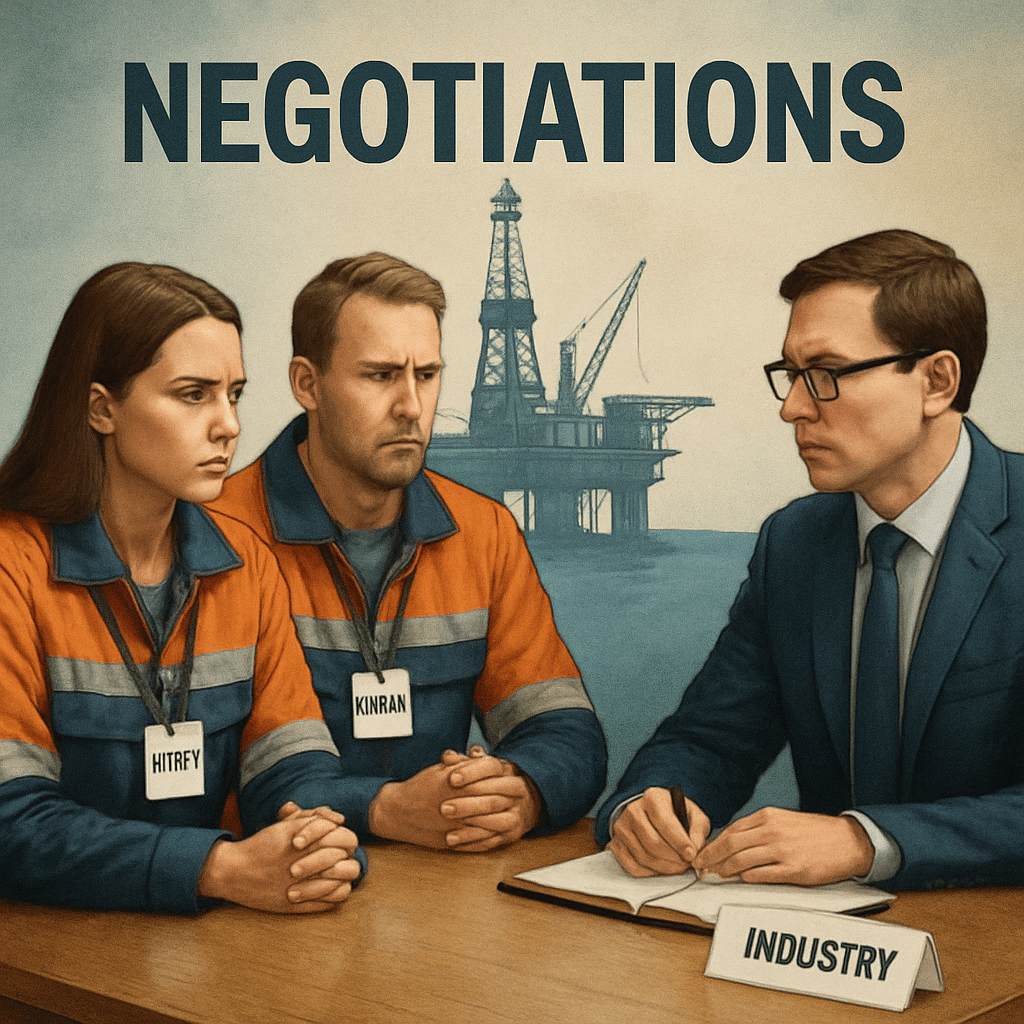
Norwegian unions representing workers on drilling rigs and floating platforms have entered state wage negotiations to prevent a wider strike in the country's oil and gas sector.
The negotiations involve the unions Styrke, SAFE, and DSO, which state that over 600 members could be the first to strike if an agreement is not reached. According to Reuters, the wage agreement covers about 7,500 workers in total, and the unions have warned that actions could escalate if negotiations fail.
Any initial disruptions would affect the Transocean Encourage drilling rig, the Odfjell Technology Linus rig, the AKOFS Seafarer intervention vessel, and Equinor's Gullfaks B platform. The negotiations are taking place against the backdrop of an existing labor conflict at sea, creating additional pressure on both employers and authorities to avoid further losses.
The workforce directly in oil companies was excluded from the conflict earlier this month after unions reached a wage agreement on June 5, avoiding a production halt. However, workers hired by oil service companies began striking on June 15 after negotiations with Offshore Norge failed.
This strike initially affected ten service companies, including SLB, DOF, Halliburton, Weatherford, Tios, DeepOcean, Subsea 7, Cactus, Vetco Gray Scandinavia, and Baker Hughes.
The conflict has since expanded as Offshore Norge extended the suspension notice under the well service agreement to cover 1,272 of approximately 1,770 SAFE members covered by the contract.
Offshore Norge, representing employers in the oil service industry, warned that the conflict could begin to have a more serious impact on production in the coming days. It stated that production losses due to the service strike could reach about 12,000 barrels of oil equivalent per day this week, and this figure could exceed 120,000 barrels of oil equivalent per day after mid-July if the suspension continues.
Production losses have already begun, as Aker BP was forced to shut down the Tambar field in the North Sea due to the ongoing labor conflict. This field produced about 7,000 barrels of oil equivalent per day in 2025.



%20scale(3)'%3E%3Cpath%20id='s'%20d='M0,-30%2017.63355,24.27051%20-28.53171,-9.27051H28.53171L-17.63355,24.27051z'%20fill='%23FF0'/%3E%3C/g%3E%3Cuse%20xlink:href='%23s'%20transform='translate(300,60)%20rotate(23.036243)'/%3E%3Cuse%20xlink:href='%23s'%20transform='translate(360,120)%20rotate(45.869898)'/%3E%3Cuse%20xlink:href='%23s'%20transform='translate(360,210)%20rotate(69.945396)'/%3E%3Cuse%20xlink:href='%23s'%20transform='translate(300,270)%20rotate(20.659808)'/%3E%3C/svg%3E)