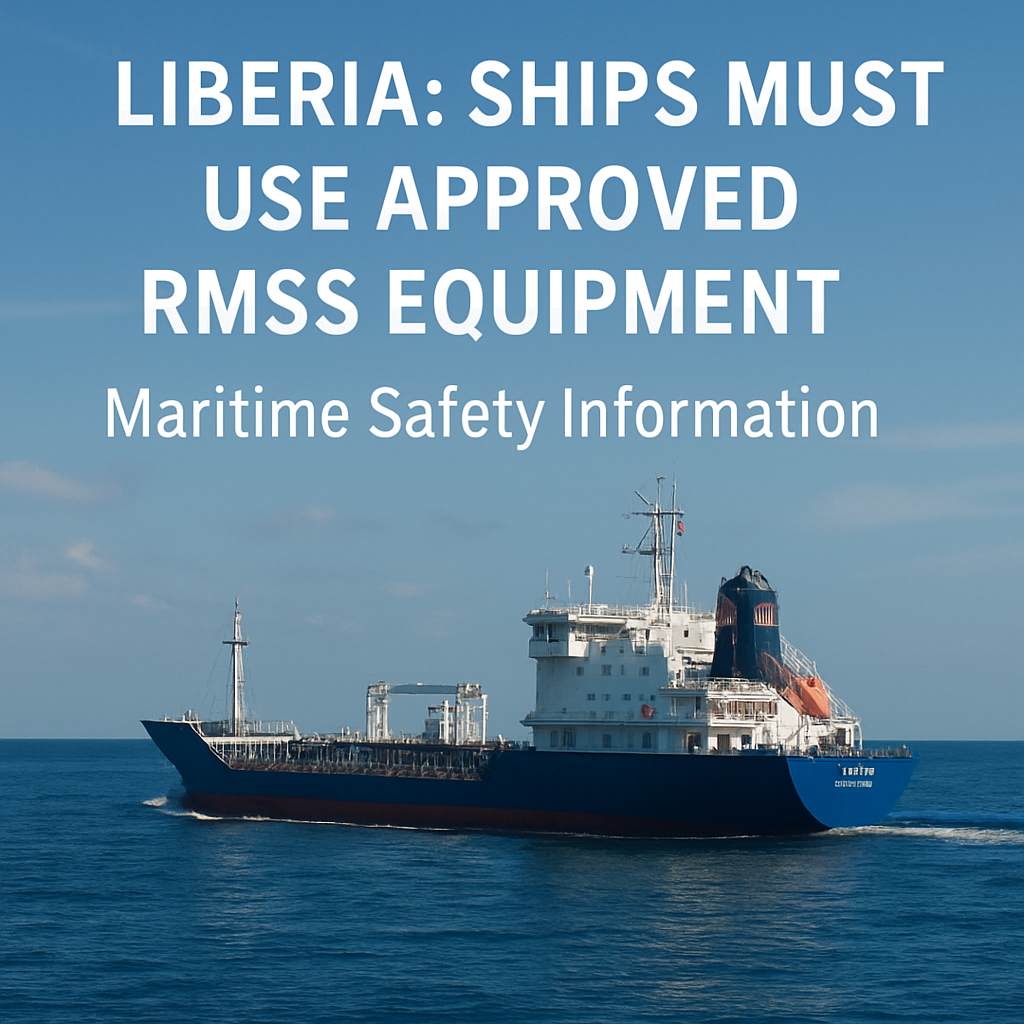
Recently, vessels entered coastal warning areas and did not have equipment properly configured to receive Maritime Safety Information (MSI) in these areas, reported the Liberia Maritime Administration in a marine notice.
According to Chapter 4 of the SOLAS Regulation, "Every ship shall be provided with a receiver capable of receiving MSI and information related to search and rescue throughout the voyage in which the ship is participating."
In some areas, coastal states have chosen to transmit information via satellite communication through the Enhanced Group Call (EGC) service, which is part of Recognized Mobile Satellite Services (RMSS). This is done instead of using shore transmission via NAXTEX, and such areas are known as coastal warning areas.
Ships are required to use their approved RMSS equipment in coastal waters where coastal warning areas are used to transmit MSI.
Some types of RMSS equipment require specific configuration to successfully receive MSI in coastal warning areas. From discussions with RMSS providers, it is known that:
- Some Inmarsat-C models require the input of specific parameters into the equipment configuration to enable MSI reception within the coastal warning area.
- Iridium GMDSS equipment does not require special configuration, and all MSI is automatically received by this equipment.
Liberia also emphasizes that if a vessel has Inmarsat-C equipment and is unsure whether its equipment requires configuration, it should contact the equipment manufacturer to verify any requirements.
If the equipment requires configuration, it is essential to ensure that the crew is trained to effectively configure their equipment, and that there are procedures in place to ensure the equipment is configured before entering the area where coastal warning areas are used.
Details about coastal warning areas can be found in the Admiralty List of Radio Signals, Volume 5.



%20scale(3)'%3E%3Cpath%20id='s'%20d='M0,-30%2017.63355,24.27051%20-28.53171,-9.27051H28.53171L-17.63355,24.27051z'%20fill='%23FF0'/%3E%3C/g%3E%3Cuse%20xlink:href='%23s'%20transform='translate(300,60)%20rotate(23.036243)'/%3E%3Cuse%20xlink:href='%23s'%20transform='translate(360,120)%20rotate(45.869898)'/%3E%3Cuse%20xlink:href='%23s'%20transform='translate(360,210)%20rotate(69.945396)'/%3E%3Cuse%20xlink:href='%23s'%20transform='translate(300,270)%20rotate(20.659808)'/%3E%3C/svg%3E)