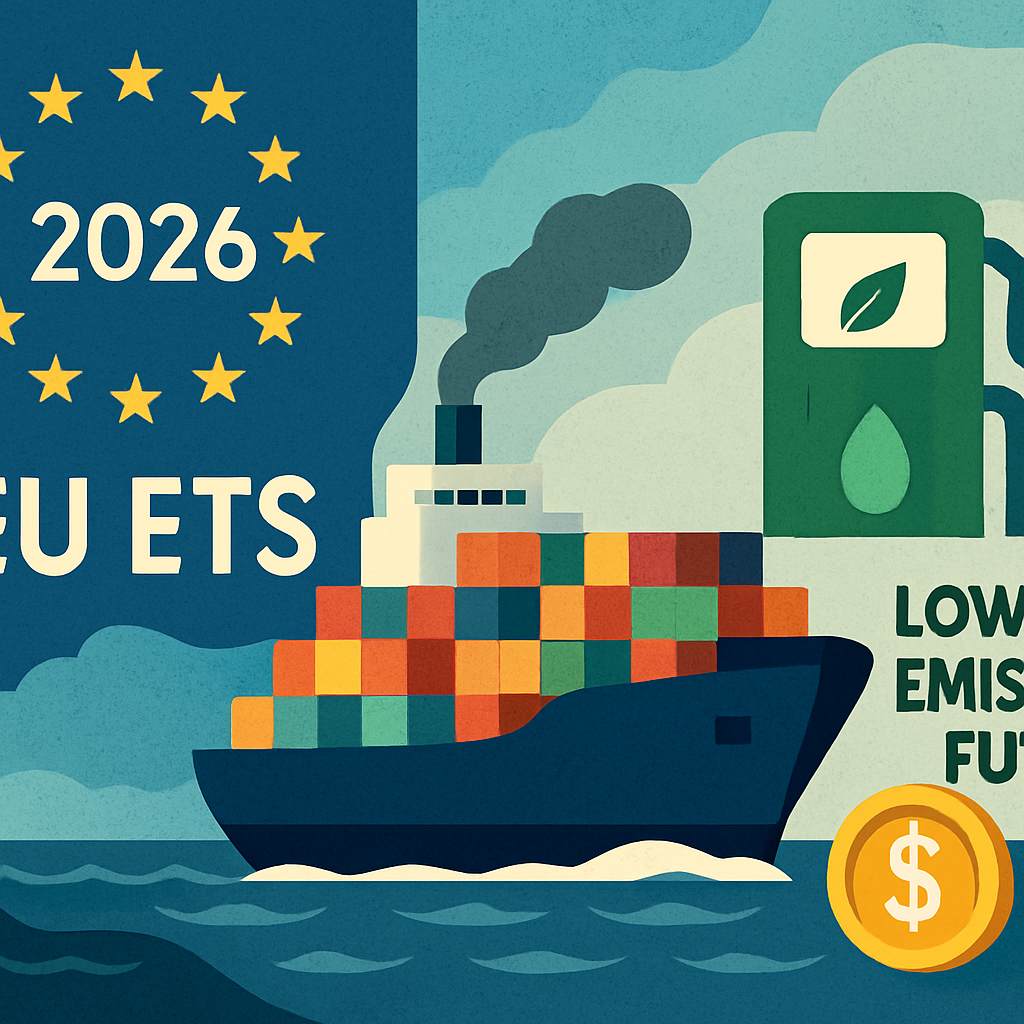
Full integration of container shipping into EU ETS in 2026 will increase costs and demand for low-emission fuels
In 2026, container carriers will be required to pay for 70% of 2025 emissions under the EU ETS, including methane and nitrous oxide. This will accelerate the growth of ETS surcharges, pressure for fleet modernization, and demand for LNG, methanol, biofuels, and hybrid drives.
Key changes in integration
- Mandatory emission payments: Carriers will pay for 70% of 2025 emissions in 2026, increasing operational costs[JSON].
- Expansion of EU ETS: The system will cover maritime transport, including methane (CH4) and nitrous oxide (N2O), harmonizing with land sectors[1][3].
- Incentive for decarbonization: Pressure to transition to low-carbon fuels and technologies to reduce quota costs[JSON][10].
Geopolitics complicates the avoidance of risky routes, increasing reliance on efficient solutions. Integration with CBAM (the Carbon Border Adjustment Mechanism) will ensure a level playing field for EU importers and producers[1][3].
Market impact and transition period
| Period | Obligations |
|---|
| 2023–2025 | Quarterly reporting without payments[2][3] |
| 2026 | Payment for 70% of 2025 emissions, no quarterly payments; full ETS integration[JSON][2] |
| 2027+ | Partial payments from Q1, expansion to steel/aluminum[1] |
Innovations maintain the EU's climate ambitions by introducing exemption thresholds (50 tons/year) for SMEs and mutual recognition of carbon taxes[2]. An increase in EUA quota prices is expected due to reduced supply[10].



%20scale(3)'%3E%3Cpath%20id='s'%20d='M0,-30%2017.63355,24.27051%20-28.53171,-9.27051H28.53171L-17.63355,24.27051z'%20fill='%23FF0'/%3E%3C/g%3E%3Cuse%20xlink:href='%23s'%20transform='translate(300,60)%20rotate(23.036243)'/%3E%3Cuse%20xlink:href='%23s'%20transform='translate(360,120)%20rotate(45.869898)'/%3E%3Cuse%20xlink:href='%23s'%20transform='translate(360,210)%20rotate(69.945396)'/%3E%3Cuse%20xlink:href='%23s'%20transform='translate(300,270)%20rotate(20.659808)'/%3E%3C/svg%3E)