Container Shipping Rates Reach New Lows in 2026
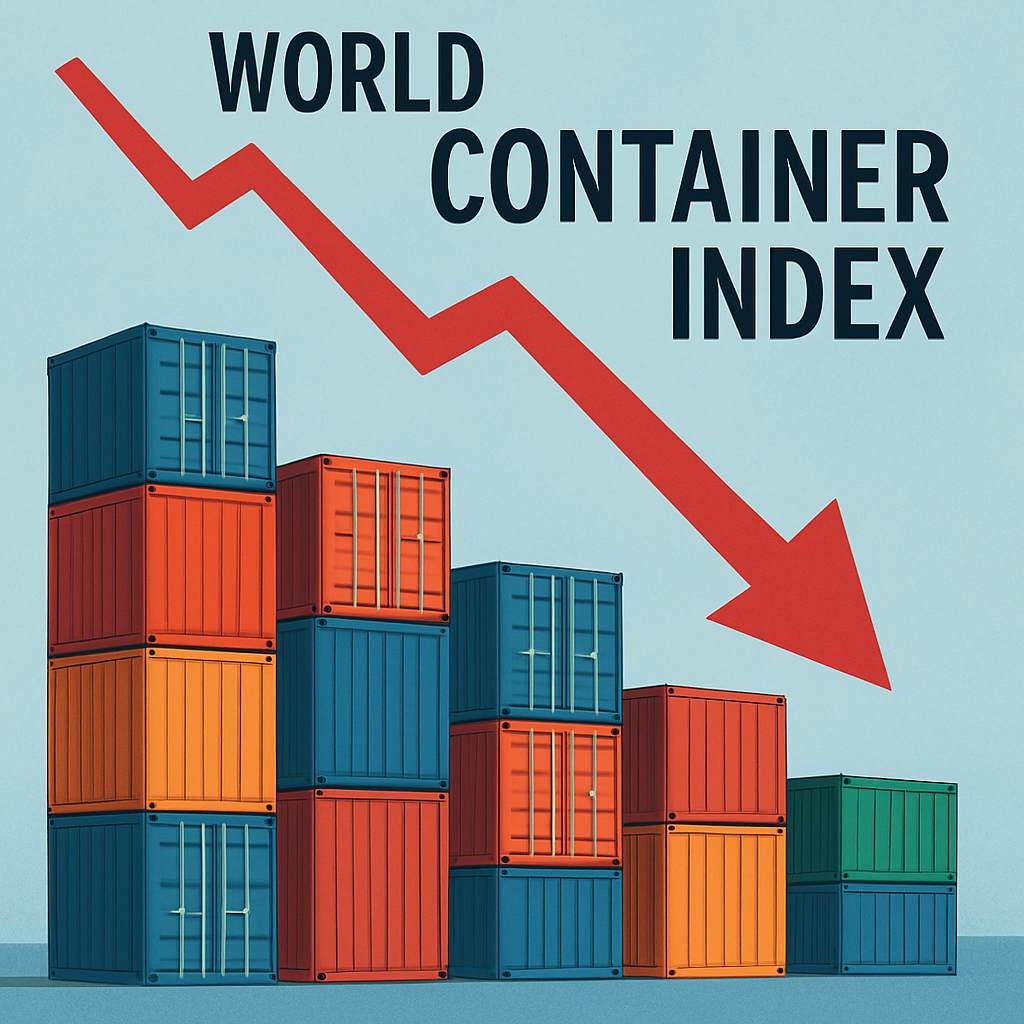
The Drewry World Container Index (WCI) is showing a consistent downward trend, reflecting increasing pressure from overcapacity on the maritime freight market. According to the latest data from February, the index continues to decline, aligning with long-term forecasts from analysts.
Current Market Status
As of January 22, 2026, the Drewry World Container Index has decreased by 10% to $2212 for a 40-foot container, marking a second consecutive week of decline primarily due to falling rates on trans-Pacific trade routes and Asia-Europe routes. Freight rates for shipments from Shanghai to New York dropped by 11% to $3191 for a 40-foot container, while rates from Shanghai to Los Angeles fell by 12% to $2546 for a 40-foot container.
In week 6 of 2026, the Drewry World Container Index fell another 7%. Drewry expects further declines in freight rates in the coming weeks.
Long-term Forecast for 2026
Experts from Xeneta and Drewry predict that long-term contracts will be revised downward in 2026 as the supply of transport capacity continues to outpace demand growth. According to Xeneta, the global container fleet is expected to grow by 3.6%, while demand for shipping will only increase by 3%.
Drewry estimates that overcapacity will lead to a 6-8% decrease in average annual freight rates in 2026. Amid fleet surplus, moderate demand, and stabilization of supply chains, 2026 is expected to be a period of moderate freight rate declines and intensified price competition among shipping lines, according to analysts.
Structural Factors Pressuring Rates
As of October 2025, the global fleet comprises over 6600 container ships with a total capacity exceeding 30 million TEU. The introduction of new ULCV-class vessels ordered in 2021-2022 continues to exert pressure on rates. Meanwhile, the scrapping rate of older vessels remains low, and global trade volumes are growing slower than expected.
BIMCO analysts note that the container shipping market will remain in a "weak phase" for the next two years – fleet supply exceeds trade needs, and operators are forced to seek a balance between vessel utilization and pricing strategies.
Strategic Decisions by Carriers
Amid declining rates, carriers are adopting various strategies regarding traditional routes. CMA CGM is shifting 3 services from Asia to Europe from the Suez route to the Cape of Good Hope route, while Maersk plans to resume regular services from India to the U.S. East Coast via the canal, focusing on changing economic parameters of the routes.



%20scale(3)'%3E%3Cpath%20id='s'%20d='M0,-30%2017.63355,24.27051%20-28.53171,-9.27051H28.53171L-17.63355,24.27051z'%20fill='%23FF0'/%3E%3C/g%3E%3Cuse%20xlink:href='%23s'%20transform='translate(300,60)%20rotate(23.036243)'/%3E%3Cuse%20xlink:href='%23s'%20transform='translate(360,120)%20rotate(45.869898)'/%3E%3Cuse%20xlink:href='%23s'%20transform='translate(360,210)%20rotate(69.945396)'/%3E%3Cuse%20xlink:href='%23s'%20transform='translate(300,270)%20rotate(20.659808)'/%3E%3C/svg%3E)