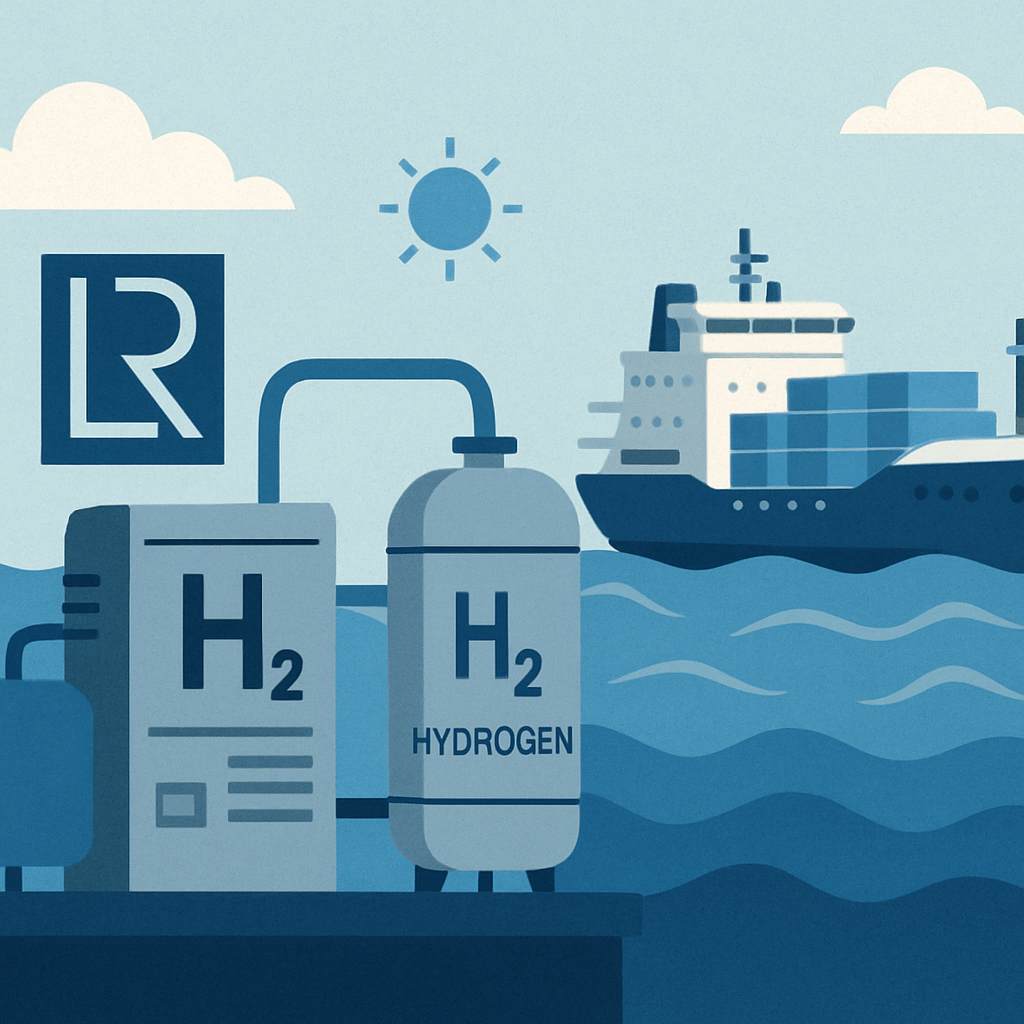
Lloyd’s Register has published the first industry guidelines for the installation and operation of onboard hydrogen generation systems on ships.
Technical Basis for Transition to Green Fuels
The classification society Lloyd’s Register (LR) has released specialized Guidance Notes (LR-GN-061), which provide clear recommendations for the design, installation, and safe integration of hydrogen generators onboard ships. The document was created in response to the growing interest from shipowners, shipyards, and technology developers in producing hydrogen from alternative fuels such as LNG, methanol, and ammonia[1][3].
The recommendations take into account the specifics of the marine environment, the risks associated with working with multiple gases and low-temperature fuels, as well as the lack of mature international regulation. They are based on existing LR rules for fuel cells and low flashpoint fuels, offering a risk-oriented approach to expedite project approvals[1][2][3].
Application for New and Retrofitted Vessels
- Applicable to new builds and retrofitting (upgraded vessels)[3].
- Reduce technical and regulatory uncertainty, shortening approval timelines with flag administrations[1][2].
- Help de-risk investments in hydrogen solutions, moving projects from concept to implementation[1][7].
"Clear guidance is essential for new technologies. The industry cannot stand still while formal regulations are being developed; our guidance provides clarity for transitioning projects from idea to launch," noted Thomas Bayer, lead fuel cell specialist in the technical directorate of Lloyd’s Register[1][2][7].
The guidance is already available on the LR website and is complemented by a new report Fuel for thought: Hydrogen, analyzing the role of hydrogen in decarbonizing shipping, including safety, infrastructure, and cost challenges[1][3].
The publication highlights LR's leadership in supporting the industry's transition to low- and zero-carbon energies, contributing to the fulfillment of future environmental standards[1].



%20scale(3)'%3E%3Cpath%20id='s'%20d='M0,-30%2017.63355,24.27051%20-28.53171,-9.27051H28.53171L-17.63355,24.27051z'%20fill='%23FF0'/%3E%3C/g%3E%3Cuse%20xlink:href='%23s'%20transform='translate(300,60)%20rotate(23.036243)'/%3E%3Cuse%20xlink:href='%23s'%20transform='translate(360,120)%20rotate(45.869898)'/%3E%3Cuse%20xlink:href='%23s'%20transform='translate(360,210)%20rotate(69.945396)'/%3E%3Cuse%20xlink:href='%23s'%20transform='translate(300,270)%20rotate(20.659808)'/%3E%3C/svg%3E)